MIC

Enquiry For Universal Testing Machines & Material Testing (MIC Lab)

+91 98490 81289 / +91 99899 21114

rajendraprasad@measure-india.com

Mechanical Testing Equipment

Which product are you looking for?

DeepIndent – Micro Hardness Testing Machines

Universal Testing Machine Accessories

DeepIndent – Micro Hardness Testing Machines

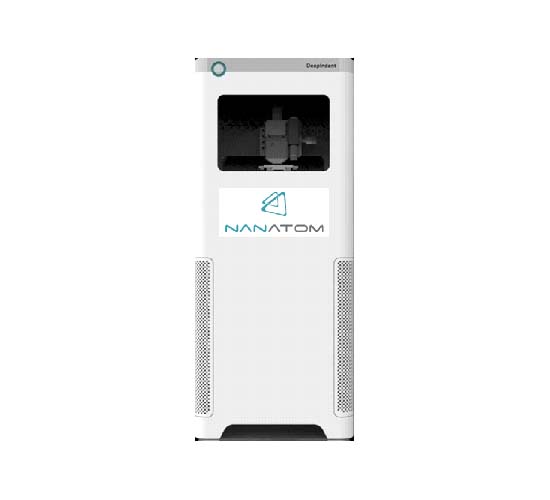
The DeepIndent Micro Hardness Testing Machine, designed by Nanatom, is an advanced instrument for micro and sub-micro indentation testing with exceptional precision. It is ideal for evaluating the hardness of various materials such as metals, alloys, ceramics, powder metallurgy materials, and thin films. The tester is compliant with ISO and ASTM standards, making it suitable for high-accuracy testing across different industries.

  • High Precision Testing: Measures material hardness with excellent accuracy, ideal for small-scale and thin-film testing.
  • Wide Material Compatibility: Suitable for metals, alloys, ceramics, powder metallurgy materials, and thin films.
  • Automatic Indentation Patterns: Capable of performing pre-designated arrays of indents in user-defined patterns for efficient and repetitive testing.
  • Open Architecture: The machine’s control system is programmable, allowing users to define custom testing patterns according to specific requirements.
  • User-Friendly Interface: Offers an intuitive interface for easy programming and operation.

Category:

Micro hardness tester, sub-micro indentation testing, instrumented hardness testing, material hardness testing, ISO compliant hardness tester, ASTM hardness standards, automated indentation testing, DeepIndent machine, thin film hardness testing, hardness testing for metals and alloys.

DeepIndent – Micro Hardness Testing Machines Overview

The DeepIndent Micro Hardness Testing Machines are cutting-edge testing systems designed to provide high-precision measurements of material hardness on a micro scale. These machines are ideal for testing small, thin, or hard-to-reach areas on samples such as coatings, thin films, and small components. With advanced technology, they deliver accurate, reproducible results, making them suitable for a wide range of industries, including electronics, automotive, aerospace, and materials research.

  1. Precision Micro Hardness Testing

    • Provides highly accurate and repeatable results for microhardness testing.
    • Suitable for thin coatings, small mechanical components, and micro-scale materials.
  2. Multiple Test Methods

    • Capable of using various microhardness scales, including Vickers and Knoop, to accommodate different materials and testing needs.
    • Supports different loads for flexibility in testing a range of material hardness levels.
  3. Advanced Control and Measurement

    • Equipped with advanced control systems for precise load application and accurate indentation measurement.
    • Automated testing cycle for consistent and efficient results, reducing human error.
  4. User-Friendly Interface

    • Simple, intuitive interface with easy-to-navigate software for seamless operation.
    • Data storage and analysis features help users track and manage results effectively.
  5. Compact and Robust Design

    • Designed for durability and compactness, making it suitable for laboratory and production floor environments.
    • High-quality construction ensures long-term reliability and accurate performance.
DeepIndent – Micro Hardness Testing Machines Overview

The DeepIndent Micro Hardness Testing Machines are high-precision instruments designed to measure the hardness of materials at the micro level. These machines are essential for testing small-scale components or thin coatings, providing valuable data for industries such as electronics, automotive, aerospace, and materials research. With their advanced technology and accuracy, these machines offer reliable microhardness testing for a wide range of materials.

  • High-Precision Microhardness Measurement
    Capable of performing tests such as Vickers and Knoop hardness at micro levels, ensuring accurate measurement of hardness for small or thin materials.

  • Advanced Indentation Technology
    Incorporates advanced load control and automated indentation systems, offering highly accurate and repeatable results across various materials, including metals, ceramics, and coatings.

  • Wide Material Compatibility
    Ideal for testing materials like metals, alloys, ceramics, thin films, coatings, and composites, making it versatile for various research and industrial applications.

  • Compact and Ergonomic Design
    Features a space-saving, compact design that fits easily into laboratory environments without compromising on performance. The ergonomic layout enhances usability during testing.

  • Automatic Data Processing
    Equipped with sophisticated software for automated data analysis, providing test results and reports quickly and efficiently. The software also offers features for test control, data storage, and result documentation.

  • High-Resolution Optical System
    Integrated with a high-resolution optical system for precise measurement of indentation size, enhancing the accuracy and reliability of hardness readings.

  • Variable Test Loads
    Provides flexibility with adjustable test loads, allowing the testing of materials of various hardness levels and thicknesses.

  • User-Friendly Interface
    The intuitive control system simplifies test setup and execution, making it easy for operators to perform tests with minimal training.

  • Compliance with Standards
    Fully compliant with international hardness testing standards like ISO 6507, ASTM E384, and ASTM E140, ensuring consistency and reliability of results.

  • Automated Load Application
    Offers automated load application and dwell time control, ensuring consistent results and eliminating human error during testing.

  • Cost-Effective Solution
    Provides accurate microhardness testing at an affordable price, making it a cost-effective choice for research labs, universities, and quality control departments.

The DeepIndent Micro Hardness Testing Machines offer unmatched precision and reliability for microhardness testing, making them indispensable tools for material analysis and research. Their versatility, ease of use, and high accuracy make them a valuable asset for industries demanding detailed material property evaluation at the micro level.

DeepIndent – Micro Hardness Testing Machine Specifications
  • Automatic Calculation of:

    • Vickers Hardness
    • Martens Hardness
    • Indentation Hardness
    • Young’s Modulus
    • Reduced Modulus
    • Indentation Creep
    • Indentation Relaxation
    • Contact Area
    • Contact Depth
  • Feedback Control Modes:

    • Load and Displacement
  • Indent Functions:

    • Standard Function
    • Trapezoid Function
    • Partial Load-Unload Function
    • Complete Unload Function
  • Automated Testing: Fully automated Z, T & Y motion control

    • Multi indent based on user-defined pattern
  • Testing Standards: In accordance with ISO 14577-1 and ASTM E2546

  • DeepSense Testing & Analysis Software Features:

    • 2D and 3D Modulus and Hardness Surface Mapping
    • Real-time Load-Displacement Plots
    • Selectable Data Acquisition Rate: 500 Hz, 1 kHz, 2 kHz, 4 kHz
    • Results Exportable to Excel, CSV, PDF, and Image Files
    • Sample Auto-Focus for fast region location
    • Extended Depth of Focus for sharp indentation images
    • Built-in Self Calibration Tools
    • Flexible Reporting Format
  • Dual Cantilever Flexure Indentation Mechanism:

    • Reduces backlash errors
    • Ensures higher rotational stiffness
    • Minimizes Yaw & Roll errors, ensuring perpendicular indentation
  • Acoustic and Vibration Damping: Ensures stable environment operation

  • Translation Stages: Sub-micron accuracy for precise sample positioning and repeatability

  • Granite Load Frame: High rigidity > 108 N/m

  • Indenter Range:

    • Berkovich
    • Modified Berkovich
    • Micro Vickers
    • Conical
    • Ball
  • Controller: Versatile EtherCAT-based with multiple ADC and DAC channels for high-speed and precise control

DeepIndent Highlights:
  • Loading Force Range: 100mN to 5 N with 1mN resolution
  • Displacement Range: Max 100 microns with 10 nm resolution
  • Adapts to ISO 14577-2
  • Upright Metallurgical Microscope: Provides highly magnified, sharp images
  • Servo Motor Stages:
    • Travel X – 150 mm
    • Y – 50 mm
    • Z – 75 mm
    • Resolution: 100 nm
  • User Interface: Self-calibration, auto-tuning, inbuilt indent patterns to reduce indent time, and enhanced output with minimal user intervention
Transducer Specifications:
  • Load Range: 100mN to 5 N, with 1mN resolution
  • Displacement Range: Up to 100 micrometres, with 10 nm resolution
Optics Specifications:
  • Optical System: Infinity color corrected, bright field
  • Light Source: LED, long working distance objectives
  • Optical Magnification: 20x (Other magnifications available)
  • Camera: USB 0, C-Mount with 1/1.2” CMOS sensor
DeepSense Software Features:
  • Real-time data graphs
  • Self-calibration tool
  • Auto-tuning feature
  • Inbuilt indent pattern options
  • Results exportable to Excel, CSV, PDF, image formats
DeepIndent – Micro Hardness Testing Machines Overview

The DeepIndent Micro Hardness Testing Machines are advanced systems designed to measure the hardness of small, thin, and delicate materials, components, and coatings. These machines utilize micro-indentation techniques to evaluate material hardness with high precision, making them ideal for testing small-scale samples or thin coatings in research and industrial applications.


  1. High Precision Indentation:

    • Utilizes advanced micro-indentation techniques to measure hardness at extremely small scales with high accuracy.
    • Suitable for materials with a thin section or microstructure, like coatings, thin films, and micro-machined components.
  2. Wide Load Range:

    • Capable of testing a variety of materials, from soft metals and polymers to hard ceramics and composites.
    • Adjustable load options to suit the hardness of different materials, ensuring accurate readings across a broad spectrum.
  3. Multiple Hardness Scales:

    • Supports various hardness scales such as Vickers, Knoop, and Rockwell for different testing requirements.
    • Enables the measurement of hardness based on the application-specific standard.
  4. Advanced Control System:

    • Equipped with an intuitive user interface for controlling test parameters such as load, dwell time, and indentation depth.
    • Provides automated testing, reducing the need for manual intervention and improving consistency.
  5. Compact Design:

    • Features a small, compact footprint that fits well in laboratories or production environments with limited space.
    • Ideal for use in R&D settings, quality control, and educational institutions.
  6. High-Resolution Imaging:

    • Integrated with high-resolution cameras or microscopes to visualize indents and accurately measure indent size and depth.
    • Enables detailed analysis of indentation shapes and material properties.
  7. Automatic Measurement and Reporting:

    • Automatic calculation of hardness values from the indentation dimensions, providing quick and reliable results.
    • Report generation is automated for easy documentation and further analysis.
  8. Versatility in Sample Types:

    • Perfect for testing materials that are too small to be measured with traditional hardness testers, such as small electronic components, coatings, and micro-machined parts.
Applications of DeepIndent Micro Hardness Testing Machines
  1. Coatings and Surface Treatments:

    • Tests the hardness of coatings on metal, glass, and ceramics, helping assess the durability and wear resistance of surface treatments like plating, anodizing, and hard coatings.
  2. Materials R&D:

    • Used extensively in material development for evaluating microstructures, composites, and newly developed materials in research laboratories.
  3. Electronics and Microelectronics:

    • Ideal for testing hardness in small parts of electronics and microelectronics such as integrated circuits, connectors, and thin films.
  4. Metals and Alloys:

    • Helps evaluate the hardness of thin metallic sheets, foils, and wires, which is important in quality control and product development in aerospace, automotive, and manufacturing sectors.
  5. Medical Devices:

    • Useful for testing hardness in small medical devices, implants, and components, ensuring they meet required mechanical properties for safety and reliability.
  6. Aerospace and Automotive Industries:

    • Helps assess the material strength and performance of lightweight components, coatings, and small-scale parts used in aircraft, automobiles, and engines.
  7. Quality Control and Inspection:

    • Ideal for routine hardness testing in production environments, ensuring materials meet specific hardness requirements.
  8. Thin Film and MEMS (Micro-Electro-Mechanical Systems) Testing:

    • Specifically designed to measure the hardness of thin films, micro-electromechanical systems (MEMS), and other small-scale devices used in cutting-edge technologies.
Advantages of DeepIndent Micro Hardness Testing Machines
  • Accuracy and Reliability:

    • Provides highly precise and reproducible results, even for micro-scale samples.
  • Non-Destructive Testing:

    • The micro-indentation process minimizes sample damage, allowing for continued use or further analysis.
  • Easy to Operate:

    • With an intuitive touchscreen interface and automated testing functions, users can easily conduct tests without specialized training.
  • Time-Saving:

    • Automated test cycles and data reporting reduce the need for manual measurements, improving testing efficiency.
  • Compact and Space-Efficient:

    • The small footprint makes it suitable for any laboratory or manufacturing environment where space is limited.

The DeepIndent Micro Hardness Testing Machines are vital tools for measuring material hardness at the microscopic level. They provide precise, reliable results that are crucial for research, quality control, and testing small components in various industries. These machines offer versatile testing capabilities and are integral in fields such as electronics, materials science, automotive, and aerospace.

1. What is the DeepIndent Micro Hardness Testing Machine?

The DeepIndent Micro Hardness Testing Machine is designed to measure the hardness of small, thin, or delicate materials and coatings at micro scales, using methods like Vickers, Knoop, or Rockwell hardness testing.

This machine can test a wide range of materials, including metals, ceramics, plastics, coatings, and thin films, making it ideal for small-scale samples.

The machine uses a diamond indenter pressed into the surface of the specimen under a specific load to measure hardness. The size of the indentation is measured to determine the hardness value.

  • Precision load control for accurate measurements.
  • Multiple testing modes such as Vickers, Knoop, and Rockwell.
  • High-resolution optics for clear indentation observation.
  • User-friendly interface for easy operation.

Yes, the DeepIndent Micro Hardness Testing Machine is specifically designed to test thin films and coatings, ensuring precise measurements even on small, delicate surfaces.

The machine typically offers load capacities ranging from 1 gf (gram-force) to 1000 gf, depending on the model, allowing for testing of both very soft and hard materials.

The accuracy of the DeepIndent machine is very high, with typical errors of less than 1% in hardness measurement, ensuring precise results even for very fine materials.

  • Automotive (for testing engine components, gears, etc.)
  • Aerospace (for materials used in aircraft parts)
  • Electronics (for testing circuit boards, coatings, and semiconductor materials)
  • Medical device manufacturing (for testing small implants or coatings)

The machine provides digital results on a screen and can often be exported to software for further analysis and report generation.

Yes, the DeepIndent machine is designed with low maintenance in mind. Regular cleaning of the indenter and periodic calibration is recommended for long-term reliability.
GET A QUOTE

Related products

Expert 2600 Series Dual Column Table Top Universal Testing Machine

Expert 2600 Series Dual Column Floor Model Universal Testing Machine

Expert 4000 Series Micro Universal Testing Machine

Expert 8600 Series Axial Torsion Universal Testing Machine

Scroll to Top