Universal Testing Machine
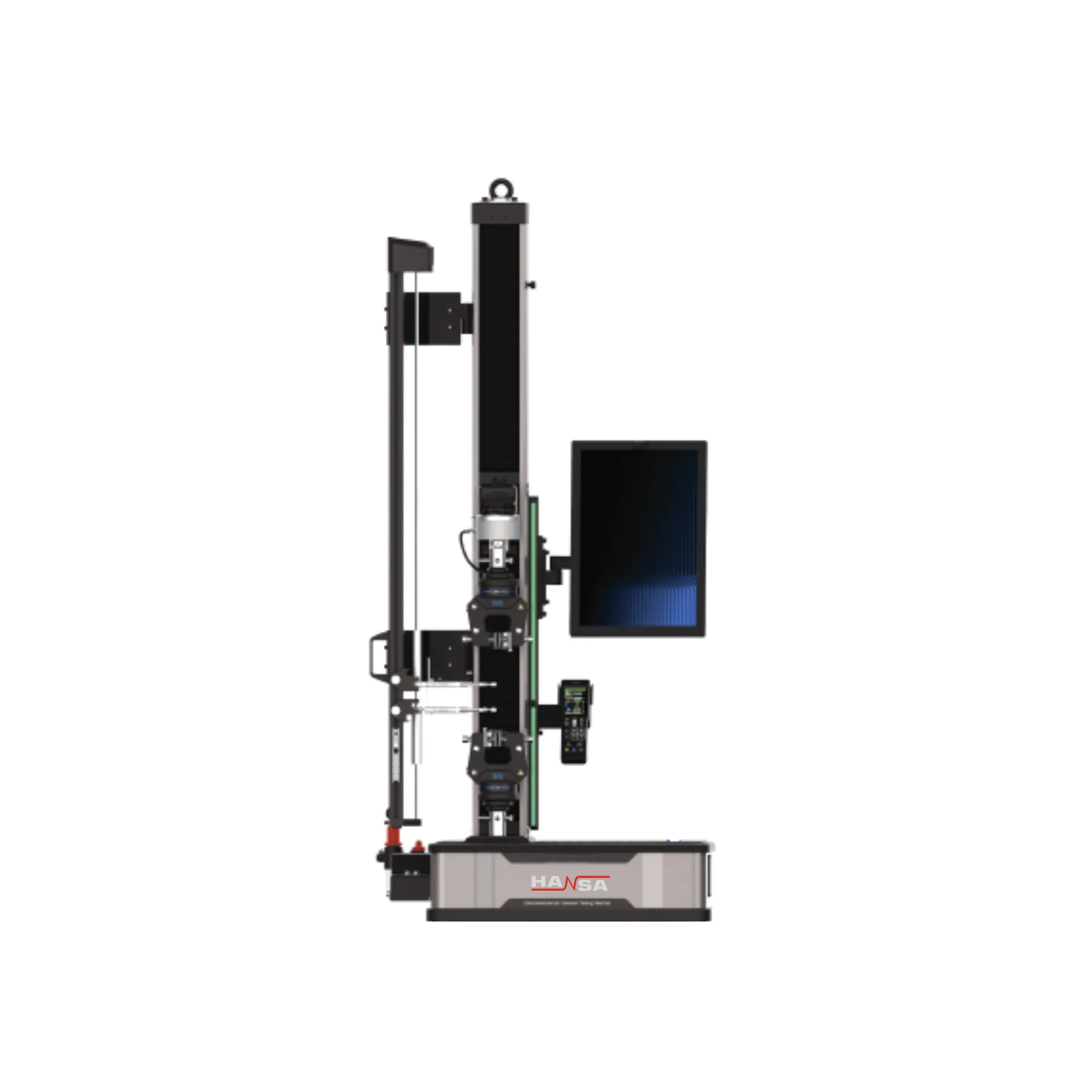
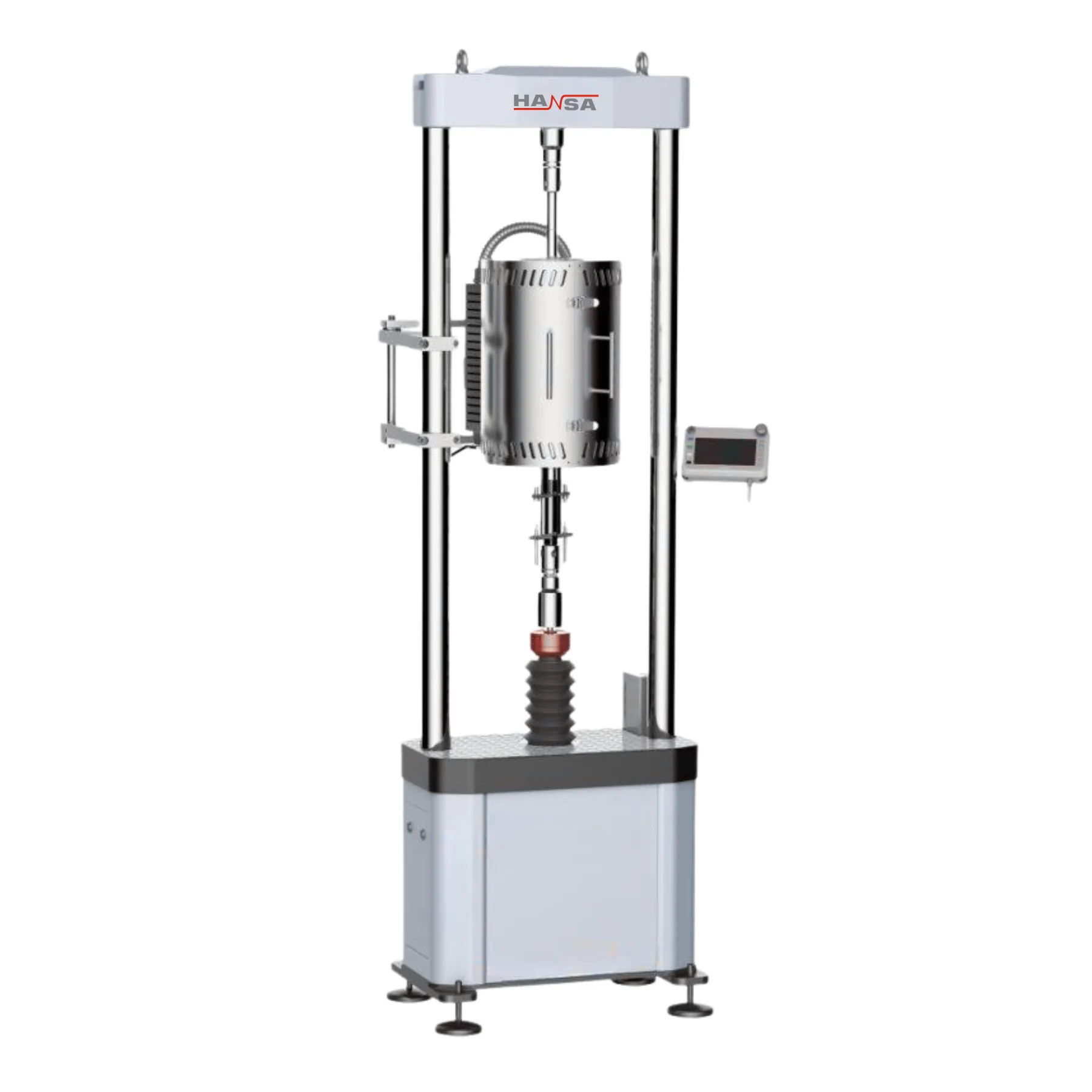
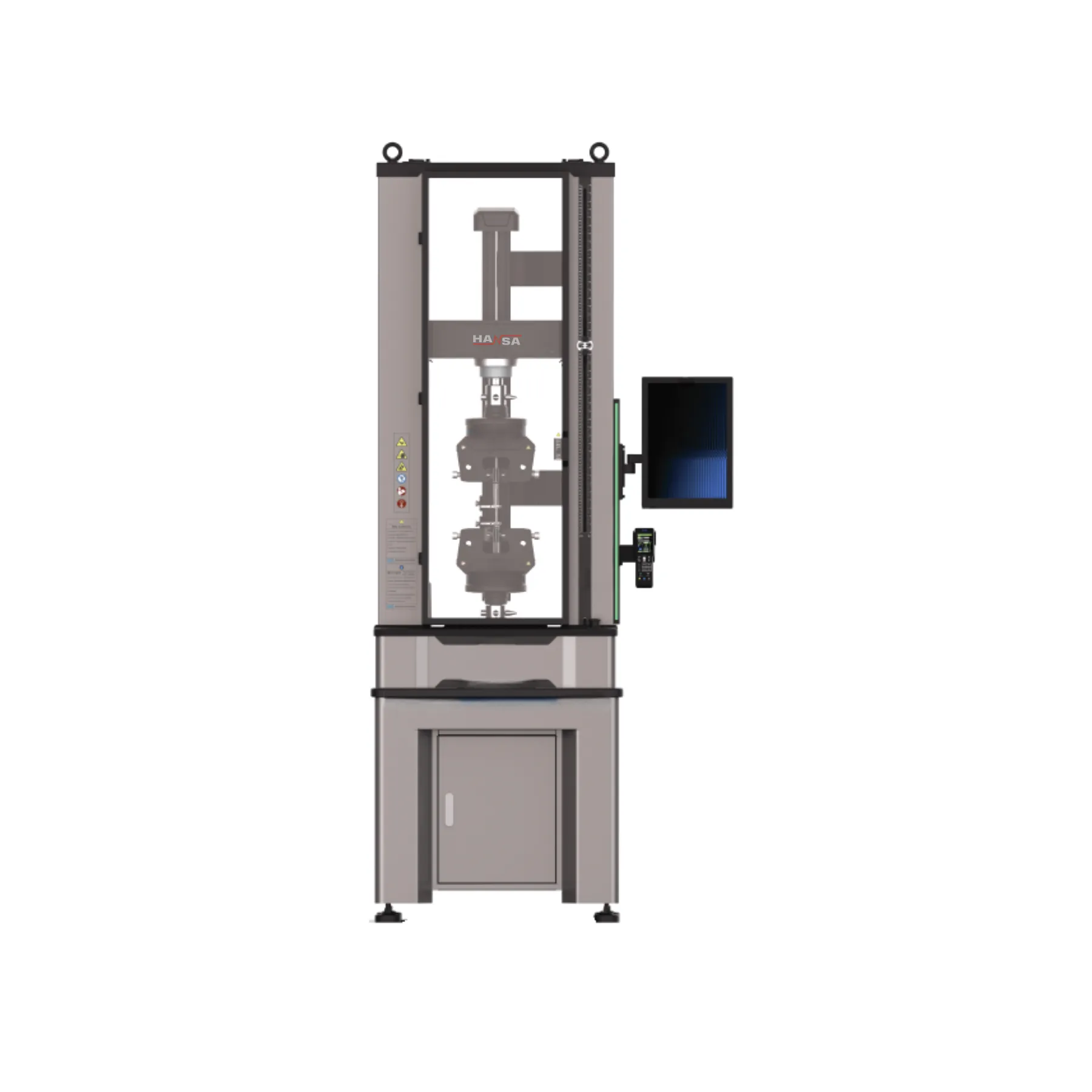
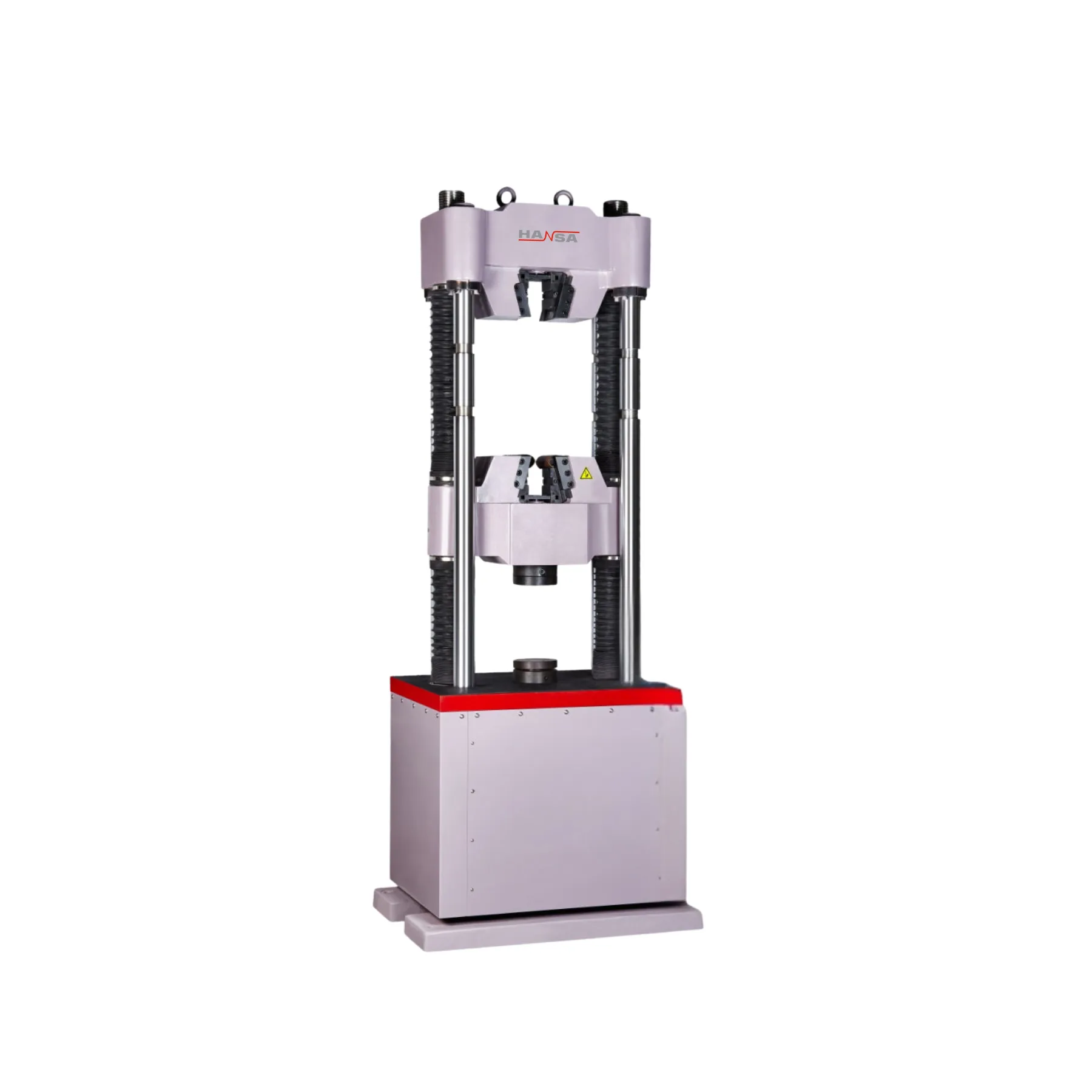
Dual Column Floor Model Universal Testing Machine
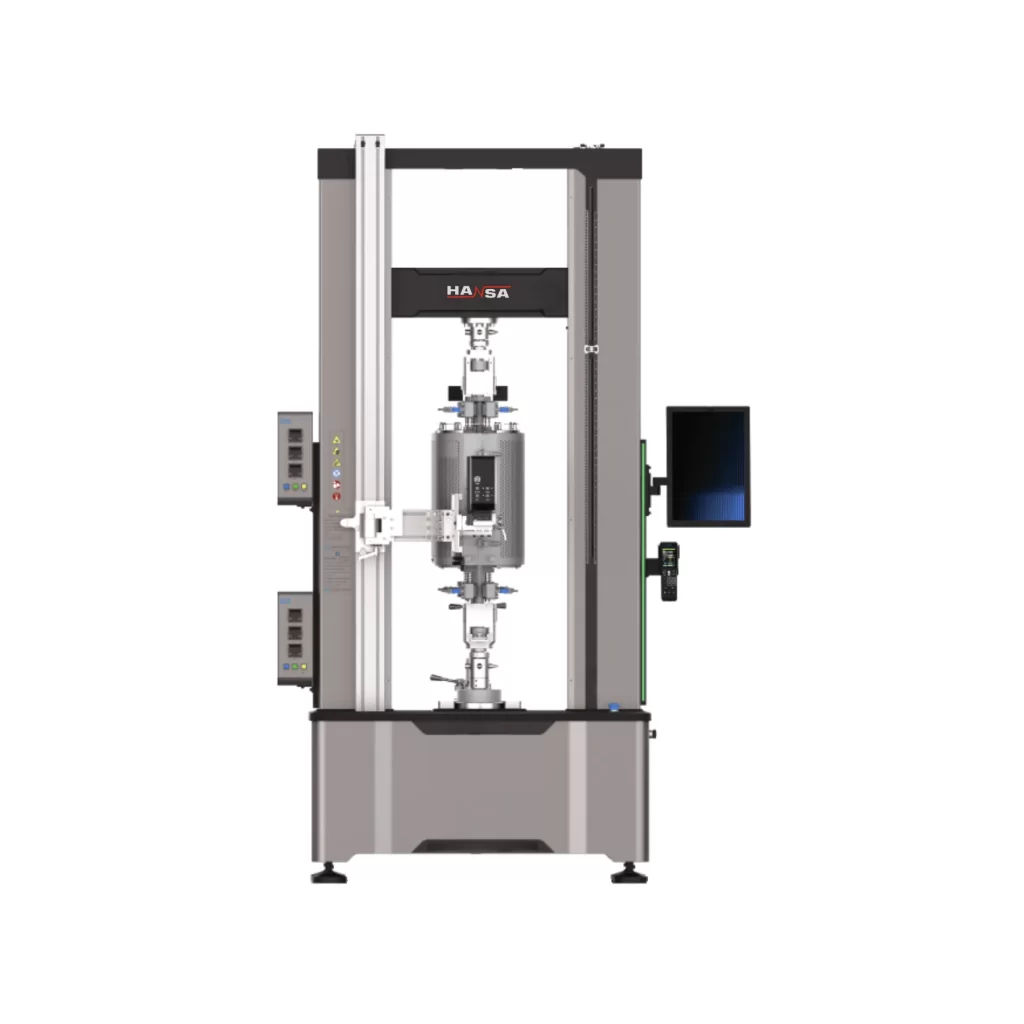
Dual Column Floor Model Universal Testing Machine | Hansa Series
A dual column universal testing machine (UTM) from Hansa Technologies (HTS Series) is a material testing system designed for static mechanical tests like tensile, compression, bending, shear, and peel. It has a rigid two-column load frame that provides stability and strength for tests on a wide range of materials. These machines are widely used in R&D labs, quality control departments, educational institutions, and industrial testing facilities.
The HTS Series UTM is an electro-mechanical universal testing machine designed to perform a variety of mechanical tests such as tensile, compression, bending, shear, peel and other static tests on engineering materials like metals, plastics, rubber, textiles and composites. These machines are available in both single-column (for lower capacities) and dual-column (for higher capacities up to around 50 kN) configurations. The dual-column models provide a rigid frame and higher load capacity for more robust testing requirements. The HTS machines are equipped with PC-based software for real-time data acquisition, graph plotting, parameter control, result storage and detailed reporting. They comply with major international standards like ISO, ASTM, IS, BS and DIN, ensuring accurate and repeatable material property measurement
Category:
The HTS Series Universal Testing Machine offered by Measure India Corporation Pvt. Ltd. is a reliable electro-mechanical testing solution designed for accurate evaluation of mechanical properties of materials. Available in single-column and dual-column configurations, the HTS machine supports tensile, compression, bending, shear and peel tests on metals, plastics, rubber, composites and other engineering materials. The rigid load frame, precision load cell and servo-controlled drive system ensure stable performance, repeatable results and long-term durability.
Integrated with PC-based testing software, the HTS machine provides real-time load–displacement graphs, automated calculations and detailed test reports in compliance with ISO, ASTM and IS standards. Backed by Measure India Corporation Pvt. Ltd.’s expertise, customers benefit from professional installation, calibration, training and dependable after-sales support, making the HTS Series an ideal choice for quality control laboratories, R&D centers, academic institutions and industrial testing applications.
Here are the features of the HTS Universal Testing Machine supplied through Measure India Corporation Pvt Ltd, based on the general product offerings and typical capabilities of UTMs:
Features of HTS Universal Testing Machine with Measure India
- Designed for a wide range of mechanical tests including tensile, compression, bending, shear, peel, tear and other static tests on materials like metals, plastics, rubber, composites and textiles.
- High precision and accuracy thanks to advanced sensors and calibrated load cells that produce consistent and reliable measurement data across test cycles.
• Wide range of load capacities available (from low to high capacity models), making it suitable for light to heavy-duty testing needs.
• Electromechanical servo or hydraulic drive systems depending on model, ensuring smooth and controlled application of forces.
• Rigid dual-column frame for enhanced stability and reduced deflection under load, improving result repeatability and machine longevity. (Typical for dual-column UTMs)
• PC-based software interface with real-time data acquisition, graphing (e.g., stress-strain curves), automated calculations and detailed report generation.
• User-friendly control panel and software that allow easy setup of test parameters and clear presentation of test results.
• Modular and interchangeable grips/fixtures to adapt the machine for different test types and specimen geometries.
• High-speed data acquisition systems for capturing detailed behavior during testing, useful for research and quality control.
• Compliance with international standards (ISO, ASTM, IS), ensuring testing results meet global quality and regulatory criteria.
• Offered with installation, calibration, training and after-sales support through Measure India, ensuring reliable performance and compliance with lab requirements.
If you’d like, I can list the typical technical specifications or applications to match these features for a specific HTS model.
Maximum Load Capacity: ranges depending on model (often from a few kN up to high capacities suitable for industrial testing). Custom capacities are available as per application requirements.
Load Measurement Accuracy: high-accuracy load cells with precision measurement for consistent results across the full range of the machine’s capacity.
Test Types Supported: tensile, compression, bending, peel, shear, tear — enabling comprehensive static mechanical property testing.
Control Method: computerized control with PC-based software interface for setting test parameters, real-time data acquisition, graphing (e.g., stress–strain curves) and report generation.
Crosshead / Stroke Control: adjustable crosshead speed with fine control allowing low to high stroke rates — suitable for a wide range of materials and test standards.
Frame Configuration: dual-column rigid frame for stable load application and reduced deflection, ensuring repeatability and long test life.
Fixtures and Grips: modular and interchangeable grips/fixtures to support different specimen shapes and test methods.
Software Capabilities: advanced software with real-time data analysis, automatic calculation of mechanical properties (yield strength, tensile strength, elongation, modulus etc.) and detailed test reporting.
Data Acquisition: high-speed data acquisition system for precise capture of force and displacement throughout a test.
Compliance and Standards: designed to meet international standards (ISO, ASTM, IS) for material testing accuracy and reporting.
Customization Options: machine configuration, load range, stroke, software features and optional environmental accessories can be tailored to specific industry requirements.
Applications: suitable for materials testing in quality control labs, R&D environments, manufacturing QA, educational institutions, automotive, aerospace and general industry.
Material Testing in Industry and Labs
HTS Universal Testing Machines are used to determine mechanical properties such as tensile strength, yield strength, elongation, compressive strength, Young’s modulus and more for a wide range of materials used in manufacturing and engineering.
Quality Control in Manufacturing
Producers of metal parts, plastic components, rubber products, composites, textiles and elastomers use UTMs for incoming material inspection and final product quality checks to ensure components meet design and safety standards.
Research & Development (R&D)
Engineering and material science R&D teams employ HTS machines to study new materials, optimize formulations, and validate mechanical behavior under different loads and test conditions.
Academic and Educational Use
Universities and technical institutes use universal testing machines for teaching material behavior, demonstrating stress–strain relationships and complying with curriculum standards in mechanical and materials engineering labs.
Automotive & Aerospace Testing
These industries require rigorous material characterization of critical structural components (like springs, fasteners, frames and load-bearing parts). UTMs help ensure safety, durability and compliance with strict regulatory standards.
Civil and Construction Materials Evaluation
Testing of construction materials (like reinforcement bars, structural steel, concrete specimens and composites) for tensile and compressive properties is essential for structural reliability and certification.
Medical & Biomedical Materials
Testing of implants, prosthetics, polymers and biomaterials to assess mechanical performance under load helps meet medical device quality requirements and regulatory compliance.
Packaging and Consumer Goods Testing
Materials like films, foils, paperboard, laminates and packaging components are tested for tensile, tear and burst strength to ensure packaging integrity and durability.
Miscellaneous Special Tests
Beyond basic tensile and compression, HTS UTMs can do shear, peel, flexural and tear tests depending on fixtures and grips, making them versatile tools across multiple product categories.
1.What is the HTS Dual Column Hansa UTM?
It’s a universal testing machine with a dual-column frame designed for performing tensile, compression, bending, shear and peel tests on a wide range of materials like metals, polymers, rubbers and composites.
2.What’s the difference between single and dual column models?
Dual column models (e.g., HTS 10, HTS 25, HTS 50) have a heavier, more rigid frame suited for higher load capacity tests, while single column machines are compact and better for low-capacity tests up to around 5 kN.
3. What tests can the HTS Dual Column machine perform?
It supports tensile, compression, bending, shear and peel testing, and can be adapted with different fixtures for specific material tests
4. Does it include software?
Yes — these machines come with PC-based software for real-time graphing, setting test parameters, storing results and generating reports.
5.How accurate is it?
HTS machines typically provide 0.5 % accuracy for load, strain and position measurements, complying with international standards like ISO, ASTM, IS, BS and DIN.
6. What is the speed range?
The crosshead speed range can be very fine (as low as 0.001 mm/min) up to higher speeds (e.g., 2400 mm/min), depending on the model, allowing flexibility for different materials.
7. Is installation and support provided?
Yes — manufacturers typically offer installation, training, calibration and after-sales support, ensuring the machine works reliably over time.