
MIC

Enquiry For Universal Testing Machines & Material Testing (MIC Lab)

+91 98490 81289 / +91 99899 21114

rajendraprasad@measure-india.com

Mechanical Testing Equipment

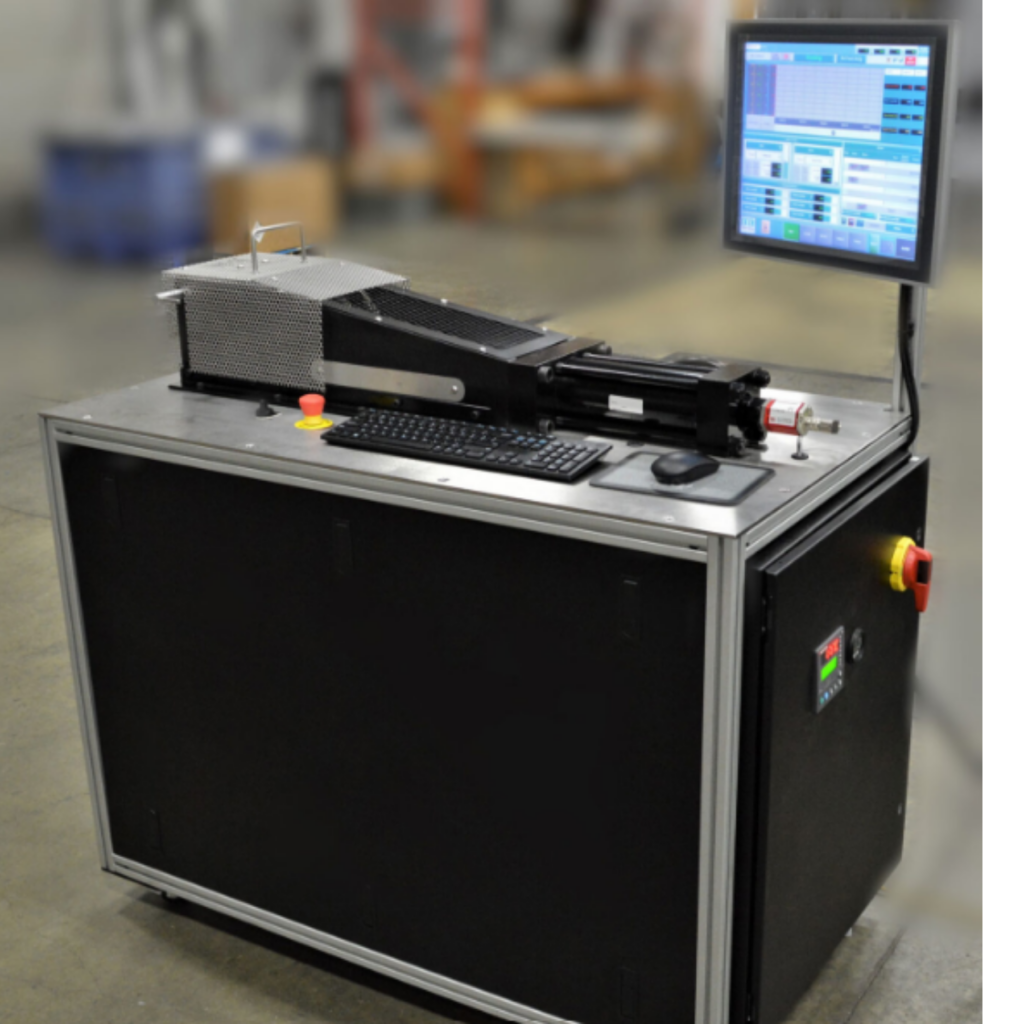
Interlaken Technology Dent Tester Machine

Dent Tester machine suppliersa all over India

  • The Interlaken Technology Dent Tester Machine is designed for precise evaluation of dent resistance, surface durability, and coating performance of coated and uncoated materials.
  • Developed by Interlaken Technology Corporation, it is widely used in automotive, appliance, packaging, and metal coating industries.
  • The system applies a controlled load through a hardened indenter to accurately measure dent depth and surface deformation.
  • It enables accurate analysis of coating strength, substrate hardness, and impact resistance under real-world conditions.
  • Built with robust construction and high-precision load control for repeatable and reliable test results.
  • Supports a wide range of test loads and specimen sizes for metal sheets, painted panels, coated surfaces, and laminates.
  • Ideal for both production quality control and research laboratory testing.

Category:

Surface Testing Equipment, Dent Resistance Testing Machines, Coating Performance Testing Systems, Material Hardness Testing Equipment, Impact Resistance Testing Machines, Quality Control Testing Equipment, Automotive Testing Instruments, Metal Sheet Testing Machines, Laboratory Testing Equipment, Industrial Inspection Systems

The Interlaken Technology Dent Tester Machine is a precision instrument designed to evaluate the dent resistance and surface durability of various materials, including metals, coated panels, laminates, and painted surfaces. It simulates real-world impacts by applying a controlled load through a hardened indenter, accurately measuring the depth and nature of dents formed.

This machine is widely used in industries such as automotive, appliance manufacturing, packaging, coatings, and construction, where surface quality and mechanical resistance are critical. Built for accuracy, repeatability, and ease of use, it provides reliable results for both research laboratories and production quality control.

Key features include precise load application, robust construction, support for different specimen sizes, and compliance with international testing standards, making it an essential tool for manufacturers aiming to improve product durability, monitor coating performance, and ensure consistent quality across production lines.


Automotive Industry: Tests car body panels, doors, and coated metal parts to ensure dent resistance and coating durability.

  • High-precision load application for accurate dent measurement.
  • Adjustable load range to test different materials and thicknesses.
  • Measures dent resistance on metals, coated panels, laminates, and painted surfaces.
  • Hardened indenter for consistent impact and minimal wear.
  • Robust, heavy-duty frame for stability and long-term durability.
  • User-friendly interface for easy operation in labs and production lines.
  • Supports multiple specimen sizes and shapes.
  • Provides repeatable and reliable results for quality control and R&D.
  • Compliant with international dent testing standards.
  • Digital measurement and display for precise dent depth recording.
  • Quick setup and calibration for efficient testing.
  • Suitable for automotive, appliance, packaging, coating, and construction industries.
  • Enables evaluation of coating adhesion and surface performance under impact.
  • Low maintenance design with durable mechanical components.

Hydraulic Wedge Grips Features

Hydraulic Wedge Grips are advanced gripping systems designed for secure and consistent specimen clamping during material testing applications. These grips utilize hydraulic pressure to provide uniform gripping force, ensuring accurate and reliable test results. Ideal for tensile, compression, and fatigue testing, they are commonly used in industries such as aerospace, automotive, manufacturing, and research laboratories.

  1. Hydraulic Clamping System:

    • Provides uniform gripping pressure, ensuring the specimen remains securely clamped without slippage.
    • Offers consistent performance, even for high-force testing applications.
  2. High Load Capacity:

    • Designed to handle high load capacities, making them suitable for testing robust materials like metals, composites, and alloys.
    • Available in configurations to support varying force requirements for different applications.
  3. Self-Centering Mechanism:

    • The hydraulic system ensures the specimen is automatically centered, reducing alignment errors.
    • Improves test accuracy and repeatability by eliminating uneven clamping forces.
  4. Wide Specimen Compatibility:

    • Accommodates a broad range of specimen sizes, shapes, and materials, from thin films to thick metals.
    • Adjustable grip jaws allow for testing of materials with different dimensions.
  5. Durable Construction:

    • Made from high-strength materials like alloy steel, ensuring durability and resistance to wear and tear.
    • Built to withstand repeated use in high-force environments.
  6. Quick and Efficient Operation:

    • Hydraulic actuation enables fast specimen clamping and release, saving time during test preparation.
    • Reduces operator effort and improves overall testing efficiency.
  7. Minimized Specimen Damage:

    • The uniform clamping pressure reduces the risk of damaging or deforming the specimen, even for delicate materials.
    • Ensures that the integrity of the material is maintained for accurate test results.
  8. Versatile Testing Applications:

    • Suitable for tensile, compression, shear, and fatigue testing.
    • Can be paired with extensometers or other accessories for additional testing requirements.
  9. High-Precision Measurement Support:

    • Works seamlessly with high-precision testing systems to deliver reliable load and displacement measurements.
    • Ensures compatibility with various testing machines.
  10. Enhanced Safety Features:

    • Equipped with overload protection to safeguard the grip system and specimen during high-force tests.
    • Hydraulic locking ensures the grips remain secure during operation, providing additional safety for operators.
  11. Energy-Efficient Operation:

    • Designed for efficient hydraulic pressure utilization, minimizing energy consumption while maintaining high performance.
    • A cost-effective solution for laboratories and production environments.
  12. Customizable Grip Jaws:

    • Offers a variety of jaw options to accommodate different specimen shapes and surface textures.
    • Customizable designs allow for specialized testing requirements, such as high-temperature or low-temperature conditions.
  13. Ergonomic Design:

    • User-friendly controls make the grips easy to operate, reducing operator fatigue.
    • The hydraulic system ensures smooth and consistent operation.
  14. Compatible with Systems:

    • Integrates seamlessly with universal testing machines and other testing systems.
    • Provides complete control through advanced software interface.

Typical/Expected Specifications for a Dent / Panel‑Dent Tester Machine

  • Load / Force Capacity: often able to apply static loads up to 1 000–3 000 kgf (≈ 9,800 – 29,400 N) when adapted from heavy‑duty panel testers.

  • Specimen Size / Test Area Capacity: able to accommodate large metal sheets or panels (for example, sheet‑metal panels used in automotive bodies) — test platforms may be sized for panel dimensions, depending on model.

  • Indenter or Loading Head: Uses a hardened indenter or pressure head for denting / deformation. On some similar testers (e.g. “cupping” / dent testers for coated panels) the deformation is applied gradually at controlled rate.

  • Loading / Deformation Control: Some dent testers (or related “cupping / dent” testers) apply load or deformation at a defined steady rate (for example around 0.1 to 0.3 mm/s for coated‑panel dent tests) to match test standards.

  • Fixture / Clamping / Panel Support: Provision to fix the test specimen (sheet or panel) rigidly to avoid unwanted movement during test — important in automotive‑panel dent testing.

  • Result Measurement: Ability to measure dent depth, “pit” size or deformation after load (or after removal of load), to assess dent resistance. In dent / cupping testers used for coatings/painted panels, test may be used to evaluate when coating cracks or detaches.

  • Construction: Heavy‑duty frame or load frame to handle high loads, especially when testing large metal panels (e.g. automotive sheet panels).

Electrical / Power (if motorized): If the tester uses motor-driven deformation (or hydraulic/servo loading), typical industrial power supply (e.g. AC 220/380 V, 50 Hz) may be required (depending on manufacturer).

Appliance Manufacturing: Evaluates metal surfaces of refrigerators, washing machines, ovens, and other appliances for impact resistance.

Packaging Industry: Assesses the strength and durability of metal cans, tins, and containers against handling and transport.

Coating and Paint Industry: Measures the effectiveness and adhesion of paints, powder coatings, and protective finishes on metal or laminated surfaces.

Construction and Architecture: Tests metal panels, cladding, and laminates used in buildings for mechanical resistance and surface quality.

Research and Quality Control Laboratories: Provides precise, repeatable measurements for material testing, R&D, and production quality assurance.

1. What is the Interlaken Dent Tester Machine used for?

 It is used to measure the dent resistance and surface durability of metals, coated panels, laminates, and painted surfaces.

 Automotive, appliance manufacturing, packaging, coatings, construction, and research laboratories.

 A controlled load is applied through a hardened indenter onto the test surface, and the resulting dent depth or deformation is measured.

 Metal sheets, painted or coated panels, laminates, and other materials requiring surface durability assessment.

 Yes, the machine is designed to meet international dent testing standards for accuracy and repeatability.

 Yes, it supports a wide range of specimen sizes and thicknesses, depending on the model configuration.

 Absolutely. It is ideal for R&D laboratories as well as production quality control lines.

 The machine provides highly repeatable and accurate results for dent depth and surface deformation.

 Yes, it features a user-friendly interface and simple setup for both lab and industrial environments.

 It helps manufacturers monitor coating performance, improve product durability, prevent surface damage, and maintain consistent quality standards.

GET A QUOTE

Scroll to Top