
Chemical Analysis Lab
We have extensive experience across a wide range of industries
Chemical Testing of Metallic Materials | Spectro Chemical Analysis Services
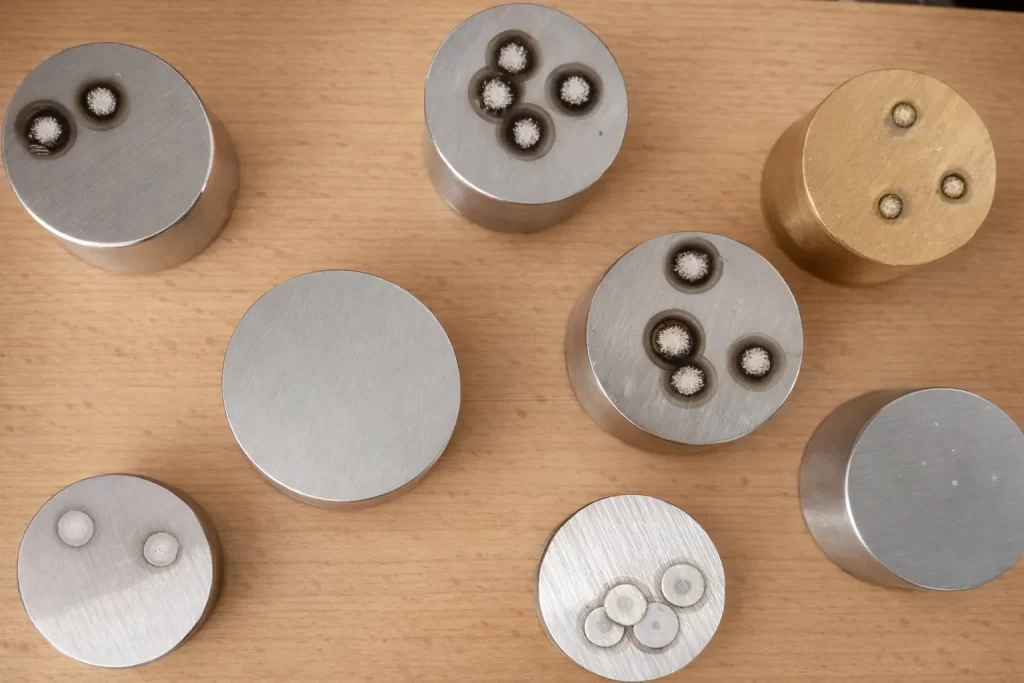
Spectro Chemical Analysis Using Optical Emission Spectrometer (OES)
Spectro Chemical Analysis is performed using an advanced Optical Emission Spectrometer (OES) to accurately determine the elemental composition of metallic materials. In this test, the metal sample is excited by an electrical discharge, causing it to emit light at characteristic wavelengths, which is analyzed to quantify the material’s elements.
This OES testing helps to:
- Verify material grade and conformity to international standards such as IS, ISO, ASTM, EN
- Ensure chemical composition control during manufacturing, fabrication, or quality inspection
- Detect alloying elements or impurities that affect critical material properties such as strength, hardness, corrosion resistance, and weldability
At MIC Labs, we use the Bruker Q4 POLO Optical Emission Spectrometer (OES), capable of analyzing a wide range of metallic materials with high precision. The instrument supports testing across four major elemental base categories:
- Iron (Fe) Base:
- Low Carbon Steel / Carbon Steel
- Stainless Steel
- Cast Iron
- Aluminium (Al) Base
- Copper (Cu) Base
- Nickel (Ni) Base
This comprehensive analysis ensures quality assurance, material conformity, and reliable performance across industries such as aerospace, automotive, construction, chemical processing, and manufacturing.
Spectro Chemical Analysis of Carbon Steel
Spectro Chemical Analysis of Carbon Steel is performed using a highly accurate Optical Emission Spectrometer (OES) to determine the chemical composition of carbon steel materials. This OES testing for carbon steel detects and quantifies essential alloying and trace elements such as Carbon (C), Manganese (Mn), Silicon (Si), Sulphur (S), Phosphorus (P), Chromium (Cr), Nickel (Ni), Molybdenum (Mo), Copper (Cu), Aluminium (Al), Vanadium (V), and others.
This chemical composition test for carbon steel helps in confirming the material grade, detecting deviations from standards, and ensuring product quality and reliability. It is an essential process for production, fabrication, and raw material inspection, where accurate chemical composition determines mechanical properties, performance, and durability.
Applications:
- Material grade verification for carbon steel components
- Quality control in steel manufacturing and fabrication units
- Incoming raw material inspection for engineering, construction, and automotive industries
- R&D and failure analysis to ensure compliance with technical specifications
Testing Standards:
IS 8811 | ASTM E415
Spectro Chemical Analysis of Stainless Steel
Spectro Chemical Analysis of Stainless Steel is carried out using a precise Optical Emission Spectrometer (OES) to determine the detailed chemical composition of stainless steel materials. This OES testing for stainless steel accurately measures elements such as Chromium (Cr), Nickel (Ni), Molybdenum (Mo), Manganese (Mn), Silicon (Si), Copper (Cu), Carbon (C), Sulphur (S), Phosphorus (P), and other trace elements.
This chemical composition test for stainless steel helps in identifying specific stainless steel grades, verifying material compliance, and ensuring adherence to international quality standards. It is widely used for material verification, grade sorting, and assessing corrosion resistance in process and manufacturing industries.
Applications:
- Stainless steel grade verification for manufacturing and fabrication
- Quality control in engineering, chemical, and food processing industries
- Incoming raw material inspection for compliance with standards
- R&D and failure analysis for stainless steel components
Testing Standards:
IS 9879 | ASTM E1086
Spectro Chemical Analysis of Cast Iron
Spectro Chemical Analysis of Cast Iron is conducted using an advanced Optical Emission Spectrometer (OES) to accurately determine the chemical composition of different types of cast iron, including Gray Iron, Ductile Iron, and Malleable Iron. This OES testing for cast iron measures key elements such as Carbon (C), Chromium (Cr), Copper (Cu), Manganese (Mn), Molybdenum (Mo), Nickel (Ni), Phosphorus (P), Silicon (Si), Sulphur (S), Titanium (Ti), and Vanadium (V).
This chemical composition test for cast iron provides critical insight into the alloy chemistry, influencing strength, wear resistance, and machinability of cast iron components. It ensures that the material conforms to foundry specifications and international product standards, supporting consistent quality in production and manufacturing processes.
Applications:
- Quality control in foundries and casting industries
- Verification of cast iron grades before machining or fabrication
- Material inspection for automotive, construction, and machinery components
- R&D and failure analysis for improving casting properties
Testing Standards:
IS 15338 | ASTM E1999
Spectro Chemical Analysis of Aluminium & Its Alloys
Spectro Chemical Analysis of Aluminium and its Alloys is performed using a precise Optical Emission Spectrometer (OES) to determine the chemical composition of aluminium materials. This OES testing for aluminium alloys identifies and quantifies key alloying elements including Aluminium (Al), Chromium (Cr), Copper (Cu), Lead (Pb), Magnesium (Mg), Manganese (Mn), Nickel (Ni), Silicon (Si), Tin (Sn), Titanium (Ti), Vanadium (V), and Zinc (Zn).
This chemical composition test for aluminium alloys helps confirm alloy grade, verify compliance with specifications, and maintain chemical uniformity. It is essential in casting, extrusion, and sheet manufacturing processes, where consistent chemical properties directly impact mechanical strength, corrosion resistance, and overall product quality.
Applications:
- Quality assurance in aluminium casting, extrusion, and rolling industries
- Alloy grade verification for rolled, forged, or machined components
- Incoming raw material inspection for aerospace, automotive, and electrical industries
- R&D and failure analysis for improving alloy performance
Testing Standard:
ASTM E1251
Spectro Chemical Analysis of Copper & Its Alloys
Spectro Chemical Analysis of Copper and its Alloys is performed using an advanced Optical Emission Spectrometer (OES) to determine the chemical composition of copper-based materials such as Brass, Bronze, and Pure Copper. This OES testing for copper alloys accurately measures key elements including Copper (Cu), Aluminium (Al), Iron (Fe), Lead (Pb), Nickel (Ni), Phosphorus (P), Sulphur (S), Silicon (Si), Tin (Sn), Zinc (Zn), and trace impurities.
This chemical composition test for copper and its alloys ensures proper alloy identification, verifies conductivity-related characteristics, and confirms compliance with material standards. The analysis plays a vital role in maintaining quality control, product reliability, and performance consistency in copper-based industrial applications.
Applications:
- Material verification for brass, bronze, and pure copper products
- Quality control in electrical, plumbing, and mechanical industries
- OES analysis for conductivity and alloy consistency checks
- Research & Development and failure analysis
Testing Standard:
BS EN 15079
Spectro Chemical Analysis of Nickel & Its Alloys
Spectro Chemical Analysis of Nickel and its Alloys is performed using a high-precision Optical Emission Spectrometer (OES) to determine the chemical composition of nickel-based materials. This OES testing for nickel alloys measures the concentration of key alloying elements including Aluminium (Al), Carbon (C), Chromium (Cr), Copper (Cu), Cobalt (Co), Nickel (Ni), Niobium (Nb), Iron (Fe), Manganese (Mn), Molybdenum (Mo), Silicon (Si), Titanium (Ti), Tantalum (Ta), Palladium (Pd), and other trace elements.
This chemical composition test for nickel and its alloys ensures chemical conformity and alloy integrity of high-performance materials such as Inconel, Monel, and Hastelloy. These alloys are widely used in aerospace, chemical processing, power generation, and high-temperature environments where precise chemical balance is essential for strength, durability, and corrosion resistance.
Applications:
- Quality control for Inconel, Monel, and Hastelloy materials
- Material verification in aerospace, oil & gas, and chemical industries
- R&D and failure analysis for advanced nickel-based materials
Testing Standard:
ASTM E3047
MIC Labs provides Spectro Analysis services across India, including Hyderabad, Bangalore, Mumbai, Delhi, Pune, Chennai, Kolkata, Ahmedabad, Gurugram, Noida, and more, serving industries such as aerospace, automotive, construction, chemical processing, and manufacturing.
Chemical Analysis Sample Preparation – FAQs
1. Why is sample preparation important in chemical analysis?
Sample preparation ensures that the material is uniform, contamination-free, and in the correct physical state for accurate testing. Proper preparation enhances repeatability and reliability in results, making it a crucial step in chemical analysis.
2. What methods are used to prepare samples for chemical analysis?
The preparation method depends on the type of material and the analysis technique. Common methods include cutting and sectioning, grinding and milling, dissolution (acid digestion), fusion (for XRF analysis), and pelletizing (for spectroscopy techniques like LIBS and XRF).
3. How does contamination affect chemical analysis results?
Contamination can alter the actual composition of the sample, leading to incorrect results. To prevent this, samples are carefully handled, cleaned, and prepared using non-reactive tools and controlled environments.
4. What standards are followed for chemical analysis sample preparation?
Sample preparation at MIC Labs follows internationally recognized standards such as ASTM, ISO, and IS, ensuring precision, accuracy, and repeatability in chemical testing.
5. How is sample preparation different for metals, polymers, and ceramics?
- Metals require cutting, grinding, and sometimes acid digestion for precise elemental analysis.
- Polymers may involve solvent dissolution or thermal treatments to break down their structure for analysis.
- Ceramics and minerals often undergo fusion or pelletizing techniques to ensure even dispersion of elements during testing.
Looking for tensile testing services in India? Get accurate, NABL-certified material testing with advanced Universal Testing Machines (UTMs) today!
Chemical Analysis Testing Process

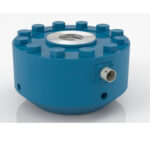
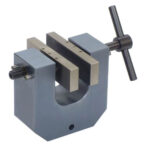
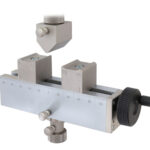
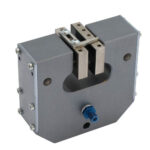
The chemical analysis testing process at MIC Labs is a structured procedure designed to determine the composition and properties of materials with high accuracy. It begins with sample collection and preparation, where solid samples are cut, ground, or milled, powders are pelletized or fused, and liquid samples are filtered or diluted. The next step involves selecting the appropriate analytical technique, such as X-Ray Fluorescence (XRF), Optical Emission Spectroscopy (OES), Inductively Coupled Plasma (ICP), Atomic Absorption Spectroscopy (AAS), Gas Chromatography (GC), or Wet Chemical Analysis, depending on the material type and testing requirements. Once the sample is prepared, it is securely placed in the instrument, ensuring proper gripping and contamination-free handling to obtain precise measurements. The instrument then analyzes the sample’s chemical composition, identifying elemental concentrations, molecular structures, or impurities. The collected data is carefully interpreted, validated, and compared against industry standards to ensure reliability and accuracy. Finally, a detailed test report is generated, providing insights into the material’s composition, compliance with regulations, and suitability for various applications in industries such as aerospace, automotive, defense, and metallurgy.




Chemical Analysis Testing Process – FAQs
1. What is the purpose of chemical analysis testing?
Chemical analysis testing is conducted to determine the composition, purity, and elemental or molecular structure of materials. It ensures quality control, regulatory compliance, and material verification in industries like aerospace, automotive, defense, and metallurgy.
2. What are the common methods used in chemical analysis?
Chemical analysis methods include X-Ray Fluorescence (XRF), Optical Emission Spectroscopy (OES), Inductively Coupled Plasma (ICP), Atomic Absorption Spectroscopy (AAS), Gas Chromatography (GC), and Wet Chemical Analysis. The selection depends on the material type and the required level of accuracy.
3. How is a sample prepared for chemical analysis?
Sample preparation varies based on the material type. Solids are cut, ground, or milled; powders are compressed into pellets or fused; and liquids are filtered or diluted to ensure consistency and prevent contamination during testing.
4. How is accuracy ensured in chemical analysis testing?
Accuracy is maintained through proper sample preparation, contamination-free handling, and calibration of instruments against certified reference standards. Additionally, multiple tests may be performed for verification.
5. How long does chemical analysis testing take?
The duration depends on the complexity of the material and the chosen testing method. Some techniques, like XRF or OES, provide results within minutes, while ICP, AAS, or chromatography-based methods may take a few hours due to sample preparation and data validation steps.
Looking for tensile testing services in India? Get accurate, NABL-certified material testing with advanced Universal Testing Machines (UTMs) today!
Chemical Analysis Sample Preparation
Chemical analysis sample preparation is a critical step in obtaining accurate and reliable test results. At MIC Labs, the process begins with collecting a representative sample to ensure precise chemical composition analysis. Large samples are then cut and sectioned into smaller, manageable pieces before undergoing grinding or milling to achieve a fine, homogeneous powder. This uniformity is essential for consistent analysis. To prevent contamination, samples are thoroughly cleaned to remove any surface impurities such as oils or oxidation. Depending on the testing method, the sample may be dissolved in acids or alkalis for wet chemical analysis, fused with lithium borate for X-Ray Fluorescence (XRF), or compressed into pellets for spectroscopy techniques like LIBS (Laser-Induced Breakdown Spectroscopy). Each preparation step adheres to ASTM, ISO, and IS standards, ensuring high precision and repeatability. Proper sample preparation enhances the reliability of chemical analysis, supporting industries such as aerospace, automotive, and metallurgy in making data-driven decisions.
Chemical Analysis Sample Preparation – FAQs
1. Why is sample preparation important in chemical analysis?
Sample preparation ensures that the material is uniform, contamination-free, and in the correct physical state for accurate testing. Proper preparation enhances repeatability and reliability in results, making it a crucial step in chemical analysis.
2. What methods are used to prepare samples for chemical analysis?
The preparation method depends on the type of material and the analysis technique. Common methods include cutting and sectioning, grinding and milling, dissolution (acid digestion), fusion (for XRF analysis), and pelletizing (for spectroscopy techniques like LIBS and XRF).
3. How does contamination affect chemical analysis results?
Contamination can alter the actual composition of the sample, leading to incorrect results. To prevent this, samples are carefully handled, cleaned, and prepared using non-reactive tools and controlled environments.
4. What standards are followed for chemical analysis sample preparation?
Sample preparation at MIC Labs follows internationally recognized standards such as ASTM, ISO, and IS, ensuring precision, accuracy, and repeatability in chemical testing.
5. How is sample preparation different for metals, polymers, and ceramics?
- Metals require cutting, grinding, and sometimes acid digestion for precise elemental analysis.
- Polymers may involve solvent dissolution or thermal treatments to break down their structure for analysis.
- Ceramics and minerals often undergo fusion or pelletizing techniques to ensure even dispersion of elements during testing.
Looking for tensile testing services in India? Get accurate, NABL-certified material testing with advanced Universal Testing Machines (UTMs) today!
Registration & Certifications
We are a certified and registered organization committed to quality and compliance.

Accredited by NABL
(National Accreditation Board for Testing and Calibration Laboratories – India)
Our laboratory is accredited by NABL as it meets international standards for quality and competence.
It operates in accordance with ISO/IEC 17025:2017. NABL accreditation is recognized
both nationally and internationally.
If you are looking for NABL-accredited testing laboratories in India, our facility provides high-precision testing services in compliance with global quality standards
- Tensile Testing: ASTM E8M, ASTM E21, ASTM B557M, ASTM A770, ASTM D3039M, ASTM D412, ASTM D638, IS 1608 (Part-1, Part-3), ISO 6892
- Compression Testing: ASTM D575
- Bend Testing: ASTM E290, IS 1599
- Low Cycle Fatigue Testing: ASTM E606
- High Cycle Fatigue Testing: ASTM E466
- Fatigue Crack Growth Rate Testing: ASTM E647
- Fracture Toughness Testing (KIC): ASTM E399
- Fracture Toughness Testing (JIC): ASTM E1820
- Creep & Stress Rupture Testing: ASTM E139, ASTM E292
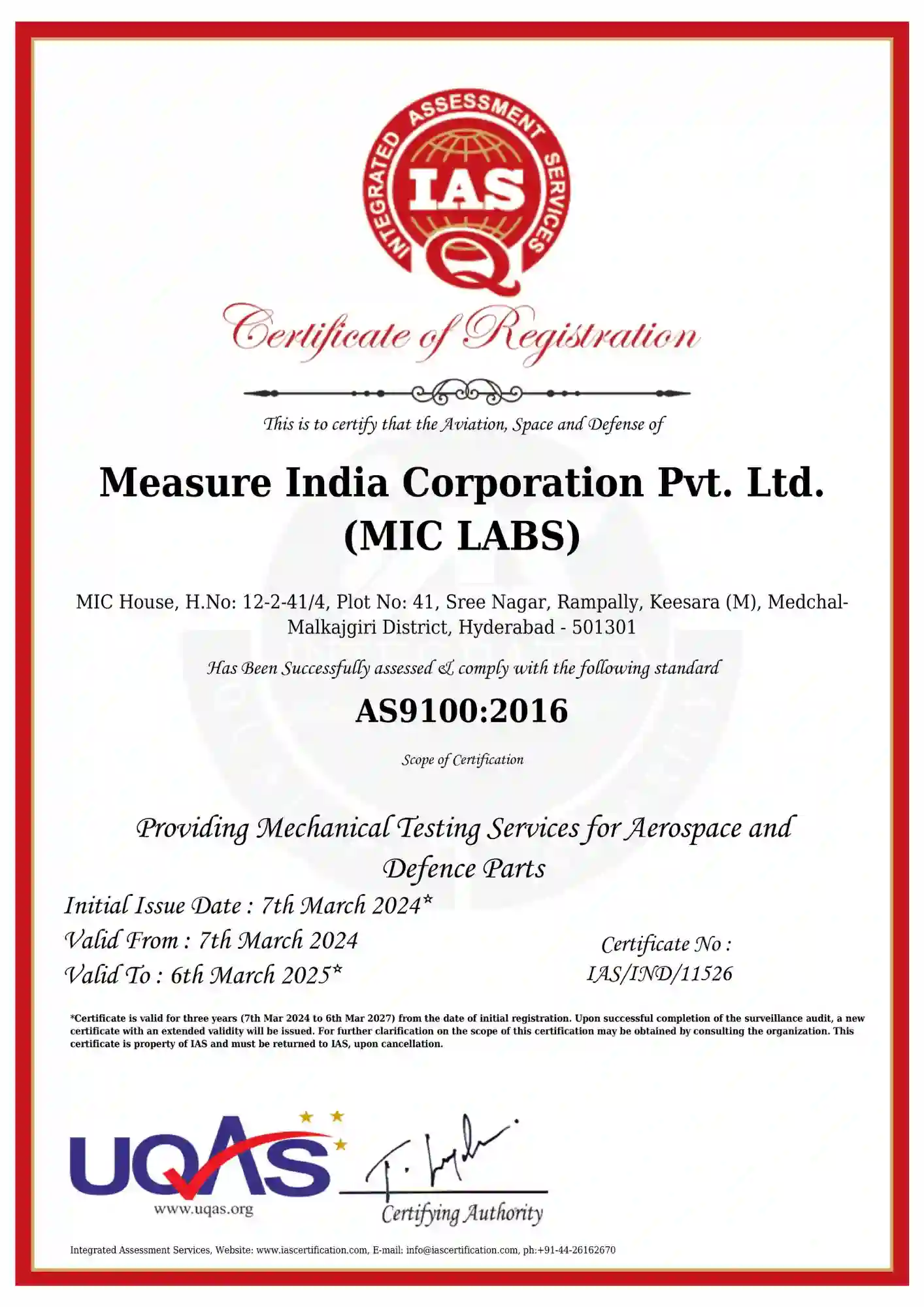
AS9100:2016 Certified
MIC Labs is certified by IAS in accordance with AS9100:2016, meeting international aerospace quality standards.
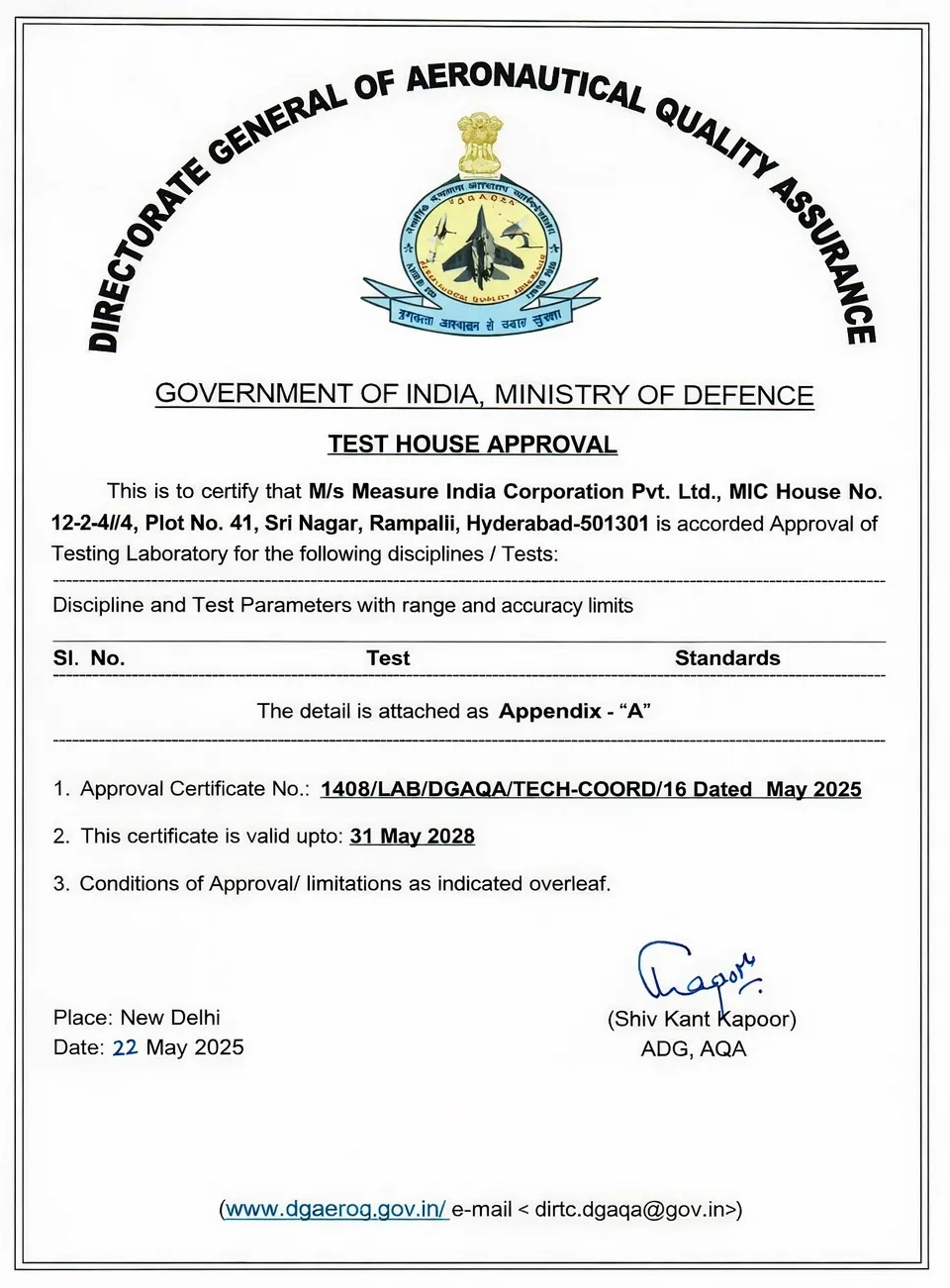
Approved by DGAQA
MIC Labs is approved by DGAQA, ensuring compliance with aerospace and defense testing requirements.

Registered by UDYAM
Measure India Corporation Pvt Ltd is UDYAM registered, recognizing us as a certified MSME in India.
This registration highlights our commitment to quality, statutory compliance, and industry standards.
Why Choose Us
We have 20 years of experience in providing material testing systems and offering testing services with great confidence.
- 90+ Products
- 500+ Customers
- 35+ Team Size
- Expertise in guiding and working with top-notch researchers and engineers
- World-class mechanical testing laboratory
Mechanical Testing Lab Services & Universal Testing Machines Suppliers in India
“With over 20 years of experience, Measure India Corporation Pvt Ltd supplies Universal Testing Machines & mechanical testing services, ensuring precision, reliability, and compliance with ASTM, ISO, and global standards across various industries.”























Contact Information
9:00 AM – 5:30 PM
Sreenagar, Rampally,
Hyderabad, Telangana 501301
Get In Touch With Us
Please fill out the form below and a member of our team will respond promptly.