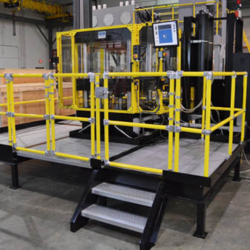
Interlaken hydroforming press machines are available in a wide range of tonnage capacities starting from small laboratory systems around 50 tons to heavy industrial presses exceeding 2000 tons. These systems support high-pressure forming operations typically ranging from several hundred bar to above 4000 bar depending on application requirements. The machines are compatible with a wide range of materials including mild steel, stainless steel, aluminum alloys, titanium, copper, and special high-strength alloys. Tube diameter, wall thickness, stroke length, and press bed size can be custom engineered as per customer requirements. The control system supports PLC or CNC-based integration with real-time pressure, force, displacement, and cycle monitoring.
Interlaken hydroforming press machines are available in a wide range of tonnage capacities starting from small laboratory systems around 50 tons to heavy industrial presses exceeding 2000 tons. These systems support high-pressure forming operations typically ranging from several hundred bar to above 4000 bar depending on application requirements. The machines are compatible with a wide range of materials including mild steel, stainless steel, aluminum alloys, titanium, copper, and special high-strength alloys. Tube diameter, wall thickness, stroke length, and press bed size can be custom engineered as per customer requirements. The control system supports PLC or CNC-based integration with real-time pressure, force, displacement, and cycle monitoring.
Benefits
By using Interlaken hydroforming technology, manufacturers in Hyderabad can significantly reduce the number of welded joints in their products, resulting in higher structural strength and improved fatigue life of components. The process reduces material wastage and improves material utilization, leading to lower overall manufacturing costs. Hydroforming enables lightweight design without compromising strength, which is especially beneficial for automotive and aerospace applications. Production consistency and dimensional accuracy are greatly improved, minimizing rejection rates and rework. The ability to form complex shapes in a single operation also shortens production cycles and increases overall manufacturing efficiency.