Universal Testing Machine
HTC Series - Creep / Stress Rupture Testing Machines
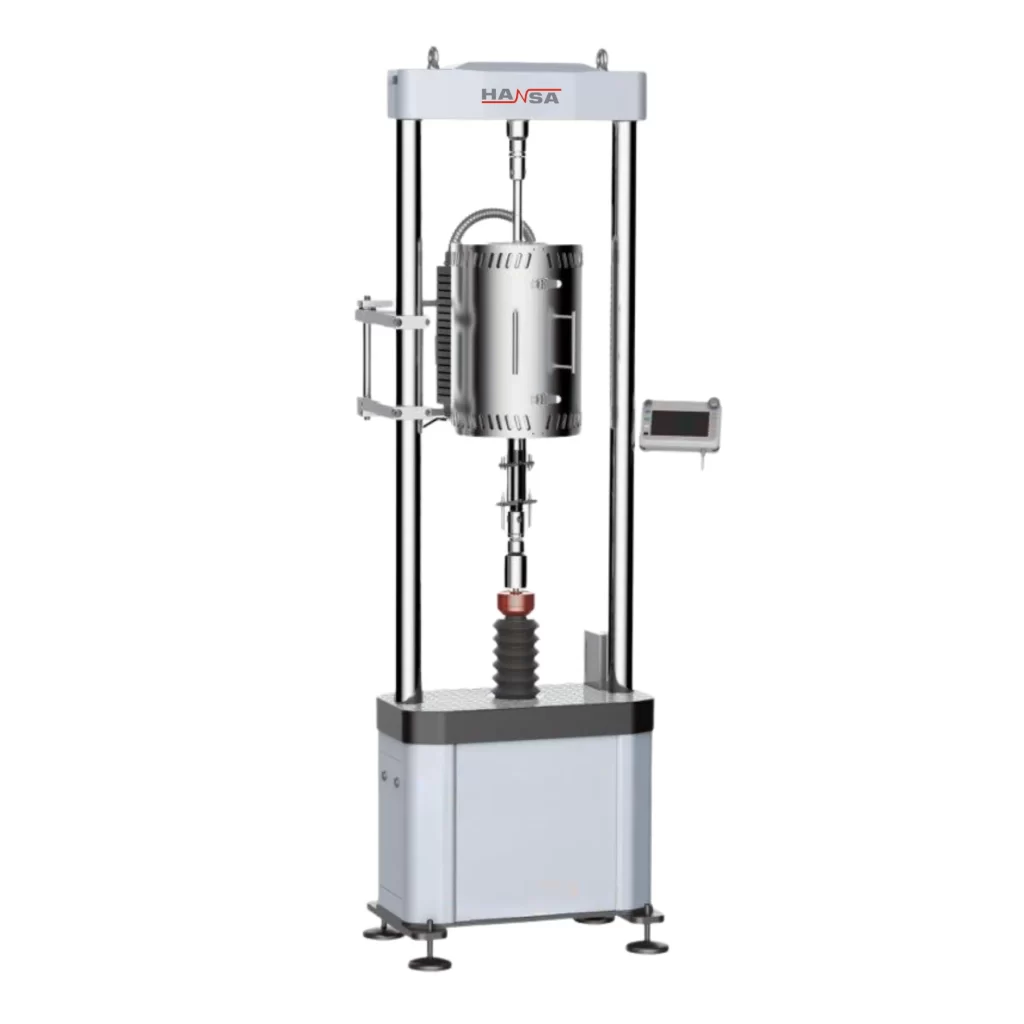
HTC Series - Creep / Stress Rupture Testing Machines
HTC Series - Creep / Stress Rupture Testing Machines
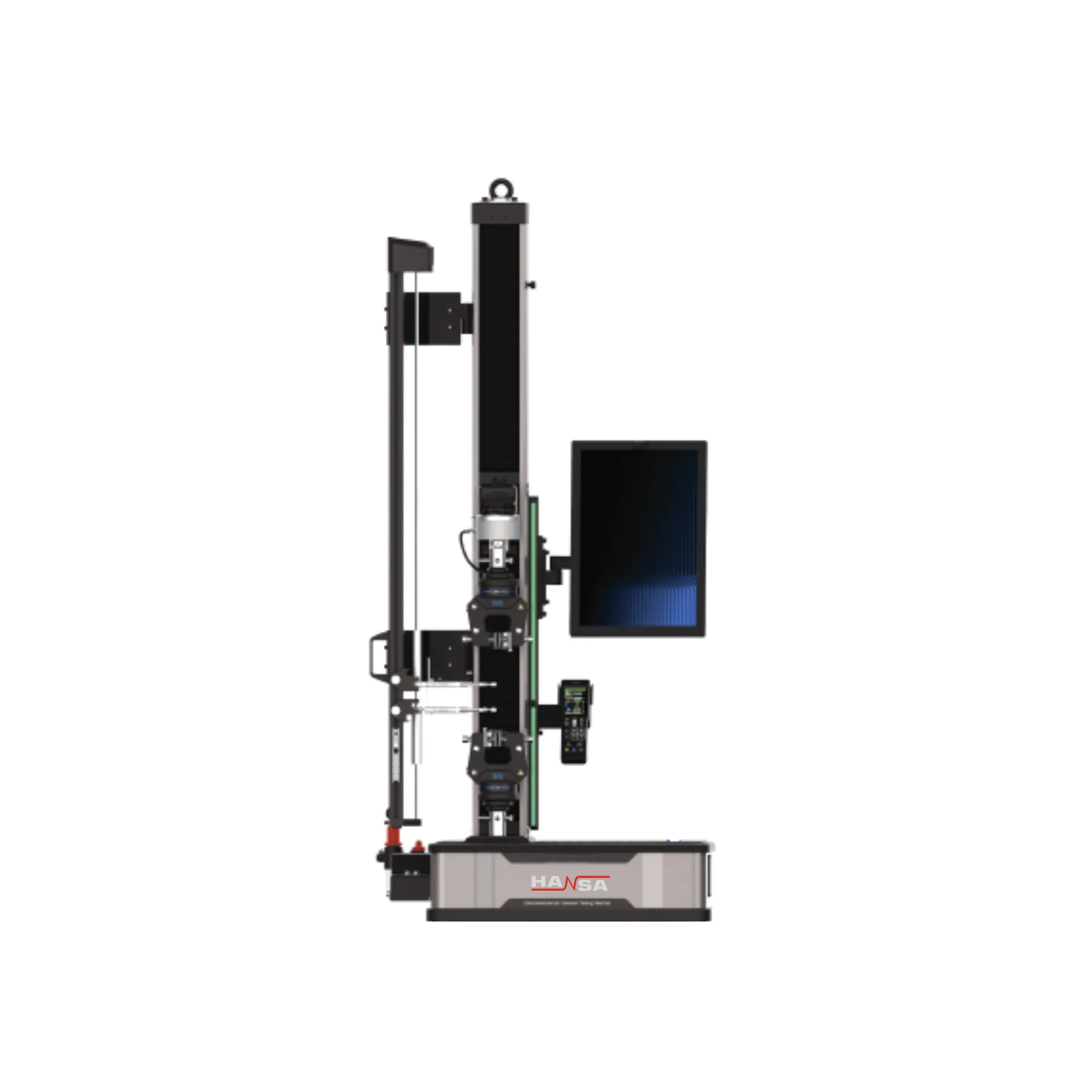
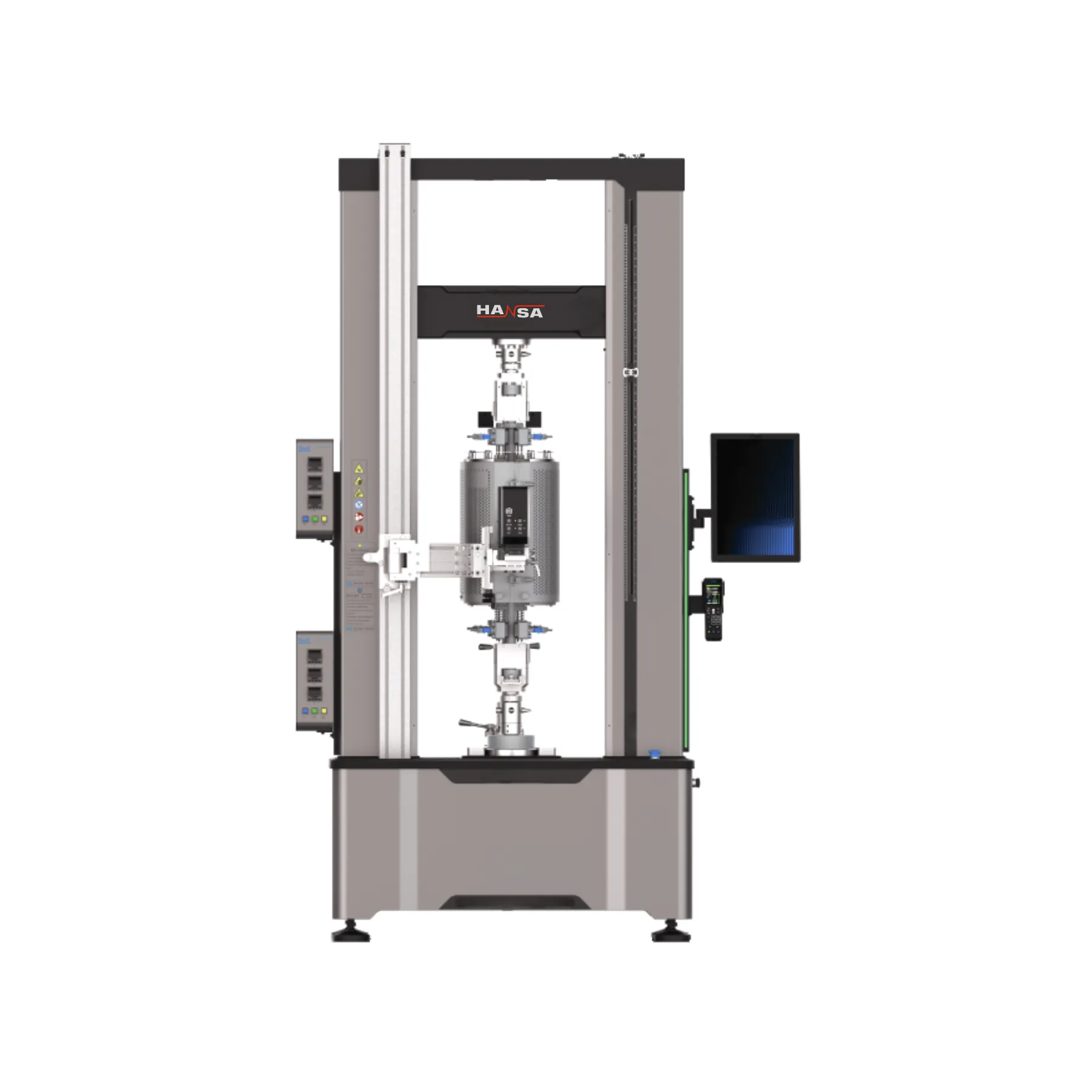
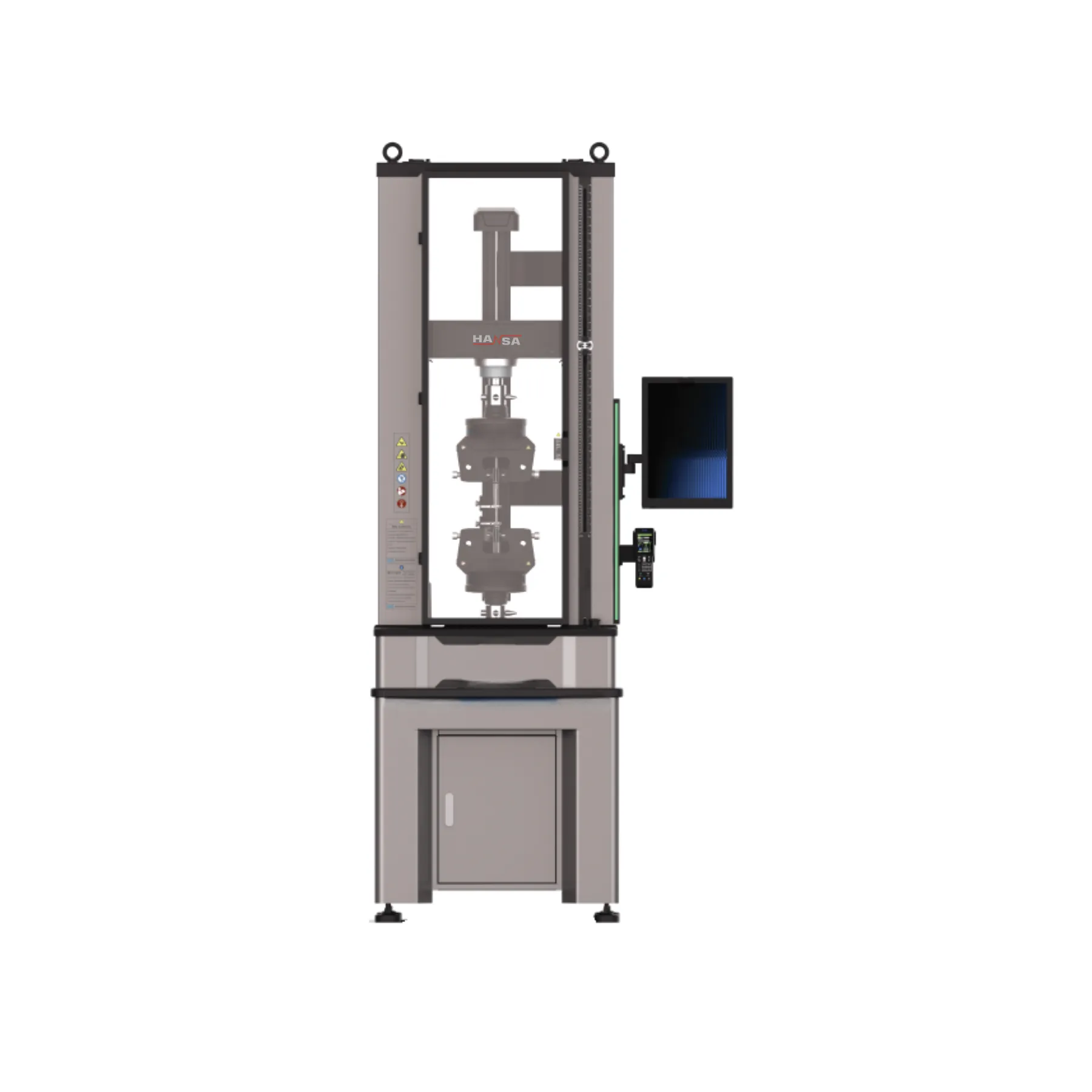
Hansa Technologies offers a comprehensive range of Creep / Stress Rupture Testing Machines designed to deliver unmatched precision, versatility, and durability. Having force capacities of 30kN, 50kN, 80kN & 100kN our machines cater to a wide spectrum of materials and applications from low force materials to heavy duty steel alloys testing at temperature up to 1200℃.
Built with state-of-the-art technology and robust engineering, these machines ensure consistent and repeatable results for Creep, Creep Rupture, Accelerated Creep, Stress Rupture, Stress Relaxation tests. The advanced load frame design minimizes deflection, while the high resolution digital control system provides accurate measurement and smooth operation.
Equipped with the latest features such as intuitive software interfaces, programmable test sequences, and real-time data acquisition, users can perform complex tests with ease and confidence. The machines are compatible with various grips, fixtures, and extensometers to suit diverse industry standards, including ASTM, ISO and more.
Whether in research laboratories, quality control departments, or educational institutions, Hansa’s Creep Testing Machines empower professionals to evaluate material properties with exceptional accuracy, enabling informed decisions for design, production, and safety.
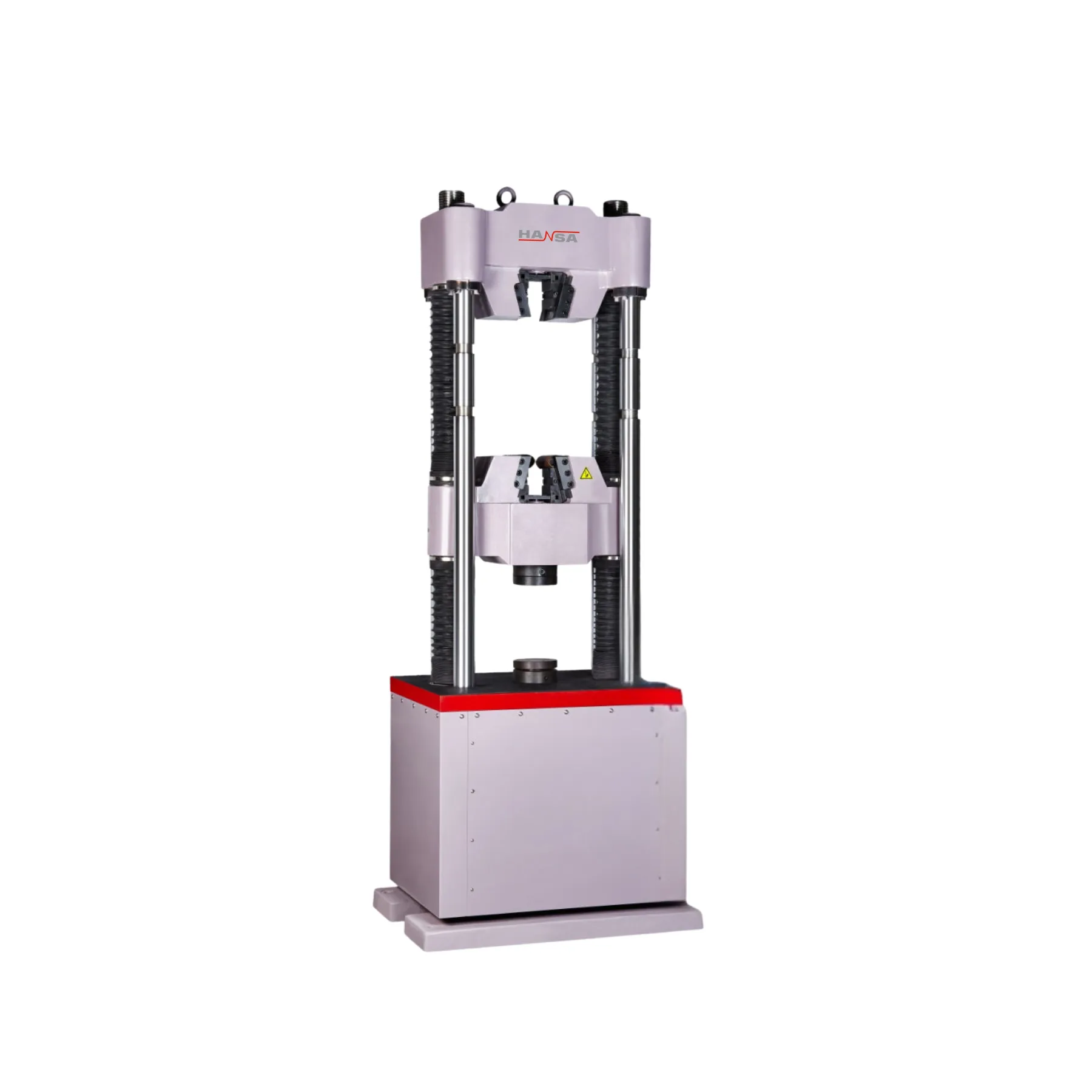
Machines are available in two options:1) Dead weight based lever arm ratio technology: HTC – A series.
Category:
Unlike standard tensile or compression testers, the HTC Series is tailored for long-duration performance testing under constant stress and heat. By maintaining a controlled temperature environment (often up to ~1100–1200 °C) and steady load, it simulates real service conditions seen in high-temperature industries. This allows researchers and engineers to understand material durability, creep rates and rupture characteristics essential for design, safety and qualification.indi
• Creep & Stress Rupture Testing: Designed to measure long-term deformation and time-to-failure under constant load and high temperature.
• High Temperature Capability: Integrated furnace for controlled elevated temperature testing.
• Precision Load Control: Servo motor and ball screw system for accurate and repeatable force application.
• Advanced Data Logging: Real-time tracking of load, displacement, temperature and time with graphical displays and reporting.
• Long Duration Testing: Suitable for tests lasting from hours to days — critical for creep studies.
• Custom Fixtures & Accessories: Various grips, pull rods, extensometers and furnace sizes tailored to specimen type.
• Robust Construction: Engineered for durability under cyclic, thermal and long-duration load conditions.
Load & Measurement
- Load Capacities: ~30 kN, 50 kN, 80 kN, 100 kN (model dependent)
- Load Accuracy: ±0.5 % of reading
- Force Range: 0.4 %–100 % of full scale
- Position & Strain Accuracy: ±0.5 %
- Data Resolution: High (up to 1/500,000 in advanced models)
Temperature & Furnace
- Temperature Range: Typically 200 °C to ~1100 °C (configurable)
- Furnace: Multi-zone temperature control with uniform zone up to ~150–200 mm
- Temperature Stability: ±2–4 °C depending on range
Control & Data Acquisition
- Control: Closed-loop load, extension and velocity control
- Controller: 32-bit digital processor
- Acquisition Rate: ~1 kHz data logging, servo loop ~5 kHz
- Software: Real-time load, temperature, displacement and time recording, graphs and reports
Drive & Mechanics
- Drive System: Servo motor with ball screw actuator
- Motorized Draw-Head: Compensates specimen elongation to maintain accuracy
Power
Typically 3-phase industrial supply (e.g., 380–440 VAC)
The HTC Series is used extensively in sectors where material performance under heat and long-term stress is crucial:
Aerospace: Turbine blades, hot-section engine components, and superalloys exposed to extreme stress and heat.
Power Generation: Steam and gas turbine materials, pressure vessel components in power plants.
Automotive: High-temperature engine parts, exhaust and turbocharger materials.
Materials R&D: Development of new alloys, composites and high-performance materials.
Nuclear & Petrochemical: Structural materials used in reactors, pipelines and heat exchangers.
Manufacturing Quality Control: Long-term durability evaluation for critical components.
1.What is creep testing?
Creep testing measures how a material gradually deforms over time under a constant load — especially at elevated temperatures. This reveals long-term stability and strain behaviour.
2.What is stress rupture testing?
Stress rupture evaluates how long a material can withstand a constant stress at elevated temperature before it fails or breaks
3. Which materials can be tested?
Metals and alloys (e.g., stainless steels, nickel alloys), composites, polymers, ceramics and other materials used under high-stress, high-temperature conditions.
4. Why is temperature control important?
Temperature significantly affects creep and rupture behaviour — testing at controlled elevated temperatures simulates real-service environments.
5. How long does a creep test last?
The duration depends on material and conditions — tests may run from several hours up to days or even weeks.
6. Does this machine do other tests?
While specialized for creep and stress rupture, it can also perform standard high-temperature tensile tests and long-term constant stress assessments with appropriate setups.
7. What software does it use?
Advanced test control software captures load, displacement, temperature and time data, plots curves and generates detailed reports.