Universal Testing Machines / Table-Top Single Column UTM / Material Testing Equipment
Single Column Table Top Universal Testing Machine
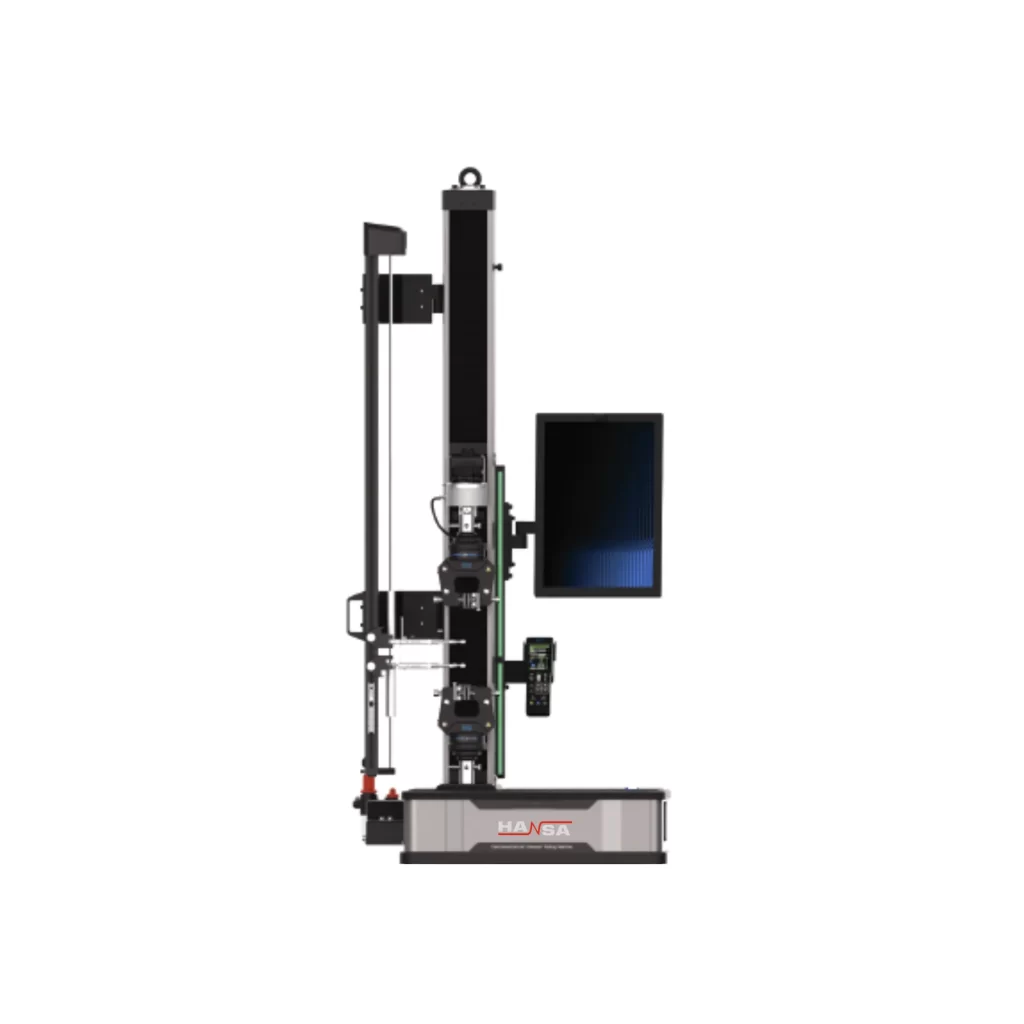
Single Column Table Top Universal Testing Machine - Hansa
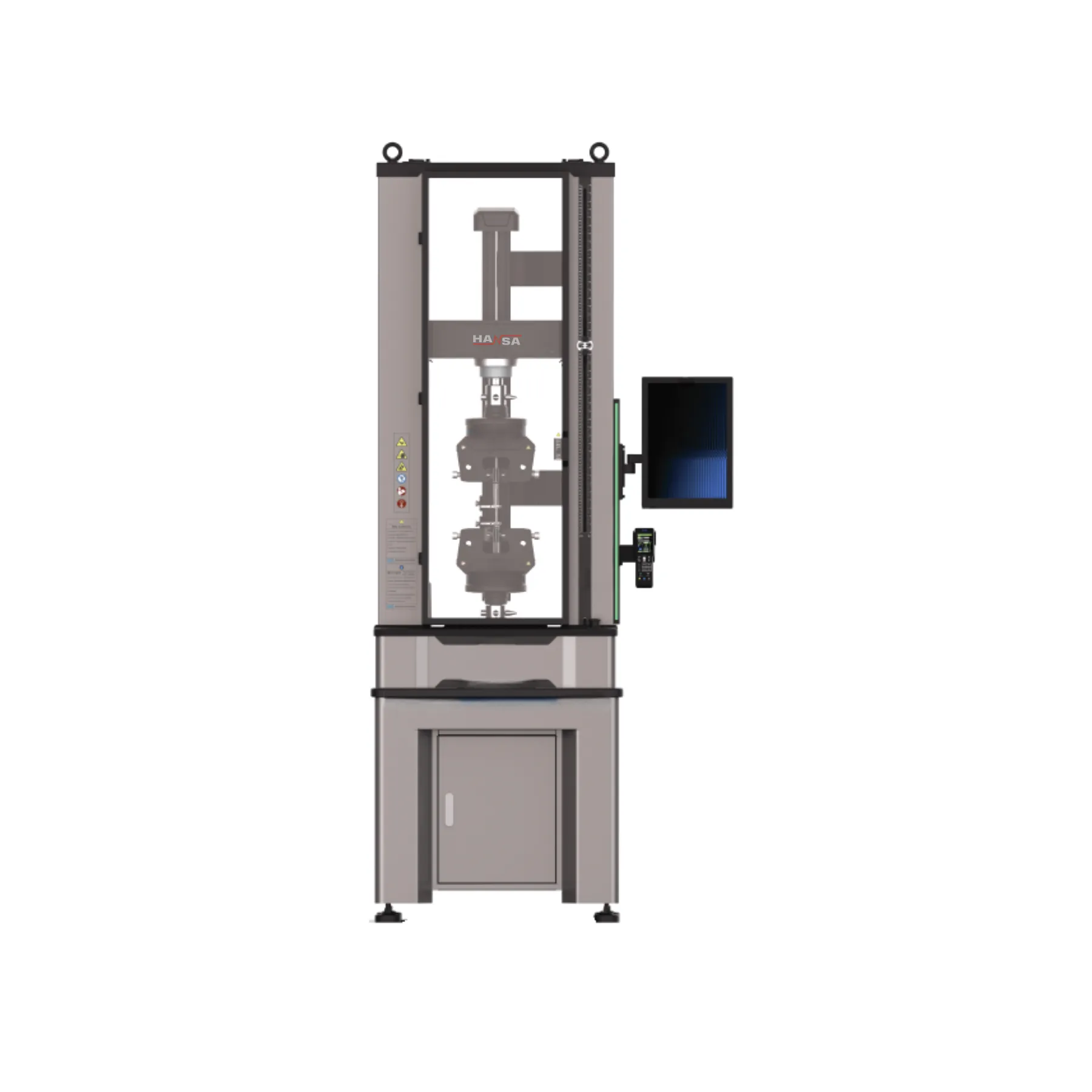
The Hansa HTS Series Table-Top Single Column Universal Testing Machine is a compact and versatile tensile testing system designed for laboratories, quality control, education, research and light industrial use. It performs tensile, compression, bending, shear and peel tests on plastics, rubber, elastomers, metals, cables, textiles and composites. The single-column table-top frame saves space and is ideal for lower load ranges up to 5 kN. The system meets ISO, ASTM, BS, DIN and IS standards with proper grips and calibration.
Category:
Hansa HTS Series Table-Top Single Column Universal Testing Machine is a compact universal testing system designed for performing fundamental mechanical property tests on materials in laboratories, quality control departments, educational institutes, and light industrial environments. It’s part of the HTS range of electro-mechanical Universal Testing Machines (UTMs) offered by Hansa for precision material evaluation.
This machine performs tensile, compression, bending, shear, and peel tests on a variety of materials including metals, plastics, rubbers, textiles, composites, and wires.
Design & Capacity
- Built around a single vertical column and table-top frame, making it space-efficient and suitable for benchtop use.
- Typically offered in low-capacity models (e.g., 0.5 kN to 5 kN) — ideal for testing lightweight and medium strength materials.
- The design ensures stable and accurate load application with minimal deflection in the test direction.
Performance & Control
- Driven by an electro-mechanical system with precision crosshead movement.
- Includes PC-based software for test setup, real-time graphing of load vs. extension, data recording, analysis, and report generation.
- Provides high accuracy in force and displacement measurement, typically around ±0.5 % of reading.
Testing Capabilities
The HTS Series UTM can carry out:
• Tensile tests to determine strength, yield and elongation.
• Compression tests to evaluate compressive strength and deformation.
• Bending/flexural tests for beams or flat specimens.
• Shear and peel tests for layered or bonded materials.
Software & Data Handling
The machine’s software enables real-time graphing, parameter setting, result storage, and report export — helping users analyze material behavior and compare results easily.
Compact, Single-Column Bench Design — A space-saving vertical frame with one column, ideal for benchtop labs and smaller test areas.
Multi-Purpose Testing Capability — Performs tensile (pull), compression (push), bending/flexural, shear and related mechanical tests using appropriate grips and fixtures.
Electro-Mechanical Drive with Precision Control — Smooth, controlled movement of the crosshead (moving grip) for accurate force application. Many units support PC software control to set test parameters and monitor progress.
High Accuracy Load Measurement — Precision load cells provide accurate readings (commonly around ±0.5 % of applied load), suitable for quality control, research, and standards compliance.
Adjustable Crosshead Speed — Variable speed range from very slow for delicate materials up to several hundred mm/min (typical UTM range: ~0.1 to 500 mm/min or more), letting you match speed to test standard.
Digital/Computerized Data Acquisition — Real-time display of load and extension, with graphing and reporting through PC software for detailed analysis.
Interchangeable Grips & Fixtures — Support for a wide variety of grips and fixtures lets you test different specimen types including wires, films, plastics, rubber, textiles and light metal parts.
Rigid Frame Construction — A sturdy frame with minimal deflection ensures repeatable and stable measurements, particularly important for tensile and compression tests.
Safety Features — Overload protection (hardware/software), limit switches, and often an emergency stop button help protect both operator and machine during testing.
Standards Support — Designed to support tests in accordance with common standards (e.g., ASTM, ISO, DIN, BIS) when properly calibrated and equipped.
Automatic Data Logging and Reporting — Test results including peak load, maximum extension, stress–strain curves and other parameters are recorded and can be exported for documentation.
Wide Range of Applications — Useful across materials like plastics, rubber, textiles, cables, films, composites and light metal samples for quality control, R&D, educational and production testing environments.
Specifications–
Capacity: 1 kN / 2 kN / 3 kN / 5 kN
Load Accuracy: ~±0.5 %
Displacement Resolution: ~0.00004 mm – 0.0001 mm
Test Speed: 0.001 – 1000 mm/min
Crosshead Travel: 960 mm (1 kN); 960 mm (5 kN)
Control: PC Software, real-time graphs, data logging
Standards: ISO / ASTM / DIN compatible
Frame: Single-column, table-top design
Power: AC 220–240 V
The HTS Series Table-Top Single-Column UTM is widely used for low-load mechanical testing of materials where high accuracy and compact design are required. It is suitable for tensile, compression, flexural, shear, peel, and adhesion tests on a broad range of materials.
It is commonly applied in plastics and polymer testing for evaluating tensile strength, elongation, flexural strength, and bonding performance of molded parts, sheets, films, and granules.
In rubber and elastomer industries, the machine is used for testing rubber strips, seals, O-rings, hoses, and soft components under controlled low-force conditions.
For packaging materials, it supports testing of paper, cardboard, corrugated boxes, laminates, foils, and films to measure tensile strength, tear resistance, peel strength, and compression behavior.
The system is ideal for textiles and fibers, including yarns, fabrics, ropes, and non-woven materials, helping determine tensile strength, elongation, and seam strength.
In electronics and electrical components, it is used for testing wires, cables, terminals, solder joints, connectors, and small assemblies requiring precise low-load force measurement
1. What is the HTS Series Table-Top Single-Column UTM used for?
The HTS Series is used for low-load mechanical testing such as tensile, compression, flexural, peel, shear, and adhesion tests on plastics, rubber, textiles, packaging materials, wires, and small components.
2. What load capacities are available in the HTS Series?
The HTS Series is available in capacities ranging from 1 kN to 5 kN, making it ideal for precision testing of low-force materials.
3. What types of tests can be performed on this machine?
The machine supports tensile, compression, three-point and four-point bend tests, peel strength, shear tests, and bond/adhesion strength testing using appropriate fixtures.
4. Is the HTS Series suitable for laboratory and R&D use?
Yes. Its compact table-top design, high accuracy, and PC-based control make it suitable for R&D labs, quality control labs, academic institutions, and production environments.
5. How does hydroforming 5. How accurate is the load measurement?
The HTS Series typically offers ±0.5 % or better load accuracy, depending on calibration and load cell selection.
6. Does the machine support international testing standards?
Yes. The HTS Series is designed to comply with ASTM, ISO, DIN, and IS standards when used with calibrated sensors and suitable test fixtures.
7. What control system is used in the HTS Series UTM?
The machine is controlled through PC-based software that provides real-time load–displacement graphs, test parameter setup, automatic calculations, data storage, and report generation.
8. Can different grips and fixtures be used with this machine?
Yes. The HTS Series supports a wide range of grips and fixtures, including tensile grips, compression platens, bending fixtures, peel fixtures, and customized accessories.
9.What safety features are included?
The machine includes overload protection, limit switches, emergency stop, and software-based safety controls to protect the operator and equipment.
10.What is the advantage of a single-column table-top design?
The single-column table-top design saves space, offers easy specimen loading, and is ideal for low-force, high-precision testing applications