

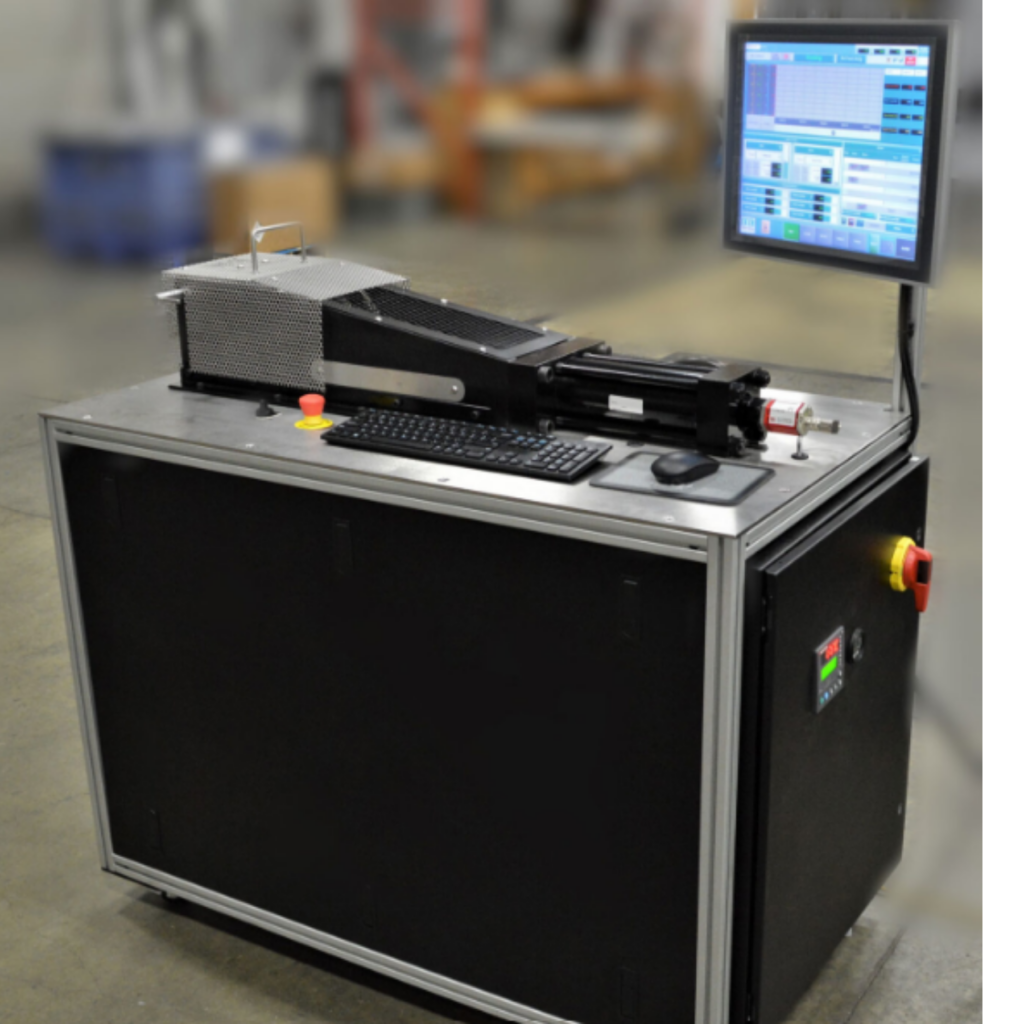
Surface Testing Equipment, Dent Resistance Testing Machines, Coating Performance Testing Systems, Material Hardness Testing Equipment, Impact Resistance Testing Machines, Quality Control Testing Equipment, Automotive Testing Instruments, Metal Sheet Testing Machines, Laboratory Testing Equipment, Industrial Inspection Systems
The Interlaken Technology Dent Tester Machine is a precision instrument designed to evaluate the dent resistance and surface durability of various materials, including metals, coated panels, laminates, and painted surfaces. It simulates real-world impacts by applying a controlled load through a hardened indenter, accurately measuring the depth and nature of dents formed.
This machine is widely used in industries such as automotive, appliance manufacturing, packaging, coatings, and construction, where surface quality and mechanical resistance are critical. Built for accuracy, repeatability, and ease of use, it provides reliable results for both research laboratories and production quality control.
Key features include precise load application, robust construction, support for different specimen sizes, and compliance with international testing standards, making it an essential tool for manufacturers aiming to improve product durability, monitor coating performance, and ensure consistent quality across production lines.
Automotive Industry: Tests car body panels, doors, and coated metal parts to ensure dent resistance and coating durability.
Hydraulic Wedge Grips Features
Hydraulic Wedge Grips are advanced gripping systems designed for secure and consistent specimen clamping during material testing applications. These grips utilize hydraulic pressure to provide uniform gripping force, ensuring accurate and reliable test results. Ideal for tensile, compression, and fatigue testing, they are commonly used in industries such as aerospace, automotive, manufacturing, and research laboratories.
Hydraulic Clamping System:
High Load Capacity:
Self-Centering Mechanism:
Wide Specimen Compatibility:
Durable Construction:
Quick and Efficient Operation:
Minimized Specimen Damage:
Versatile Testing Applications:
High-Precision Measurement Support:
Enhanced Safety Features:
Energy-Efficient Operation:
Customizable Grip Jaws:
Ergonomic Design:
Compatible with Systems:
Typical/Expected Specifications for a Dent / Panel‑Dent Tester Machine
Appliance Manufacturing: Evaluates metal surfaces of refrigerators, washing machines, ovens, and other appliances for impact resistance.
Packaging Industry: Assesses the strength and durability of metal cans, tins, and containers against handling and transport.
Coating and Paint Industry: Measures the effectiveness and adhesion of paints, powder coatings, and protective finishes on metal or laminated surfaces.
Construction and Architecture: Tests metal panels, cladding, and laminates used in buildings for mechanical resistance and surface quality.
Research and Quality Control Laboratories: Provides precise, repeatable measurements for material testing, R&D, and production quality assurance.
It is used to measure the dent resistance and surface durability of metals, coated panels, laminates, and painted surfaces.
Automotive, appliance manufacturing, packaging, coatings, construction, and research laboratories.
A controlled load is applied through a hardened indenter onto the test surface, and the resulting dent depth or deformation is measured.
Metal sheets, painted or coated panels, laminates, and other materials requiring surface durability assessment.
Yes, the machine is designed to meet international dent testing standards for accuracy and repeatability.
Yes, it supports a wide range of specimen sizes and thicknesses, depending on the model configuration.
Absolutely. It is ideal for R&D laboratories as well as production quality control lines.
The machine provides highly repeatable and accurate results for dent depth and surface deformation.
Yes, it features a user-friendly interface and simple setup for both lab and industrial environments.
It helps manufacturers monitor coating performance, improve product durability, prevent surface damage, and maintain consistent quality standards.